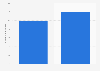
| Characteristic | Labor income loss as share of labor income |
|---|---|
| - | - |
| - | - |
| - | - |
The chart is not accessible to screen readers. Please switch to the table view to access the data.
September 2020
Africa
Q1 to Q3 2020
Estimates as of September 23, 2020
Labor income losses are due to the loss of working hours.
The source estimated the values based on a model namely "nowcasting model".
Values were calculated taking employment levels of the fourth quarter of 2019 as the baseline.
Losses of labor income in billions are rounded up to the nearest 5 billion. Due to rounding, some values for the sub-region may not add up to the corresponding region.
To demonstrate the magnitude of the predicted hours lost, the equivalent losses in full time jobs are introduced. They are calculated based on the assumption that decreases in working hours were borne entirely and comprehensively by a group of full-time workers, while the rest of the workers experienced no reduction in working hours.
Full-time equivalent (FTE) jobs data that is more than 50 million are rounded up to five million, while the values lower than the threshold are rounded to the closest million.
According to the source, the figures should not be interpreted as number of jobs lost or actual increase in unemployment,
A benchmark of working hours before the pandemic was used to compute the FTEs of working hours percentage-drops.
Full-time jobs are considered as those with a workload of 48 hours per week.