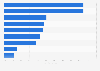


| Characteristic | Allowed | Prohibited | Hard to say |
|---|---|---|---|
| - | - | - | - |
| - | - | - | - |
| - | - | - | - |
| - | - | - | - |
| - | - | - | - |
| - | - | - | - |
| - | - | - | - |
| - | - | - | - |
| - | - | - | - |
| - | - | - | - |
| - | - | - | - |
| - | - | - | - |
| - | - | - | - |
The chart is not accessible to screen readers. Please switch to the table view to access the data.
Download
Source
Source
Release date
April 2019
More information
Region
Poland
Survey time period
2018
Number of respondents
993**
Special properties
Pupils from 55 schools
Supplementary notes
The source does not provide any information regarding missing percentage points to 100 percent.
The source does not provide any information regarding percentage points exceeding 100 percent.
* The original question was worded as follows: (Polish) 鈥濳t贸re z poni偶szych aktywno艣ci w internecie powinny by膰 wed艂ug Ciebie dozwolone, a kt贸re zabronione:鈥� (English: "Which of the following online activities you think should be allowed and which ones you think should be prohibited:").
** The survey involved 1,173 pupils from 55 schools from all over Poland:
- primary school N = 531
- lower secondary school N = 25
- upper secondary school N = 456
- technical secondary school N = 161
In the research pupils were divided into two groups:
(1) pupils in the seventh grade of primary and second grade of lower secondary schools (merger due to the recent education reform),
(2) pupils in upper secondary schools, i.e. pupils in the second grade of lower secondary schools and technical schools.
Citation formats