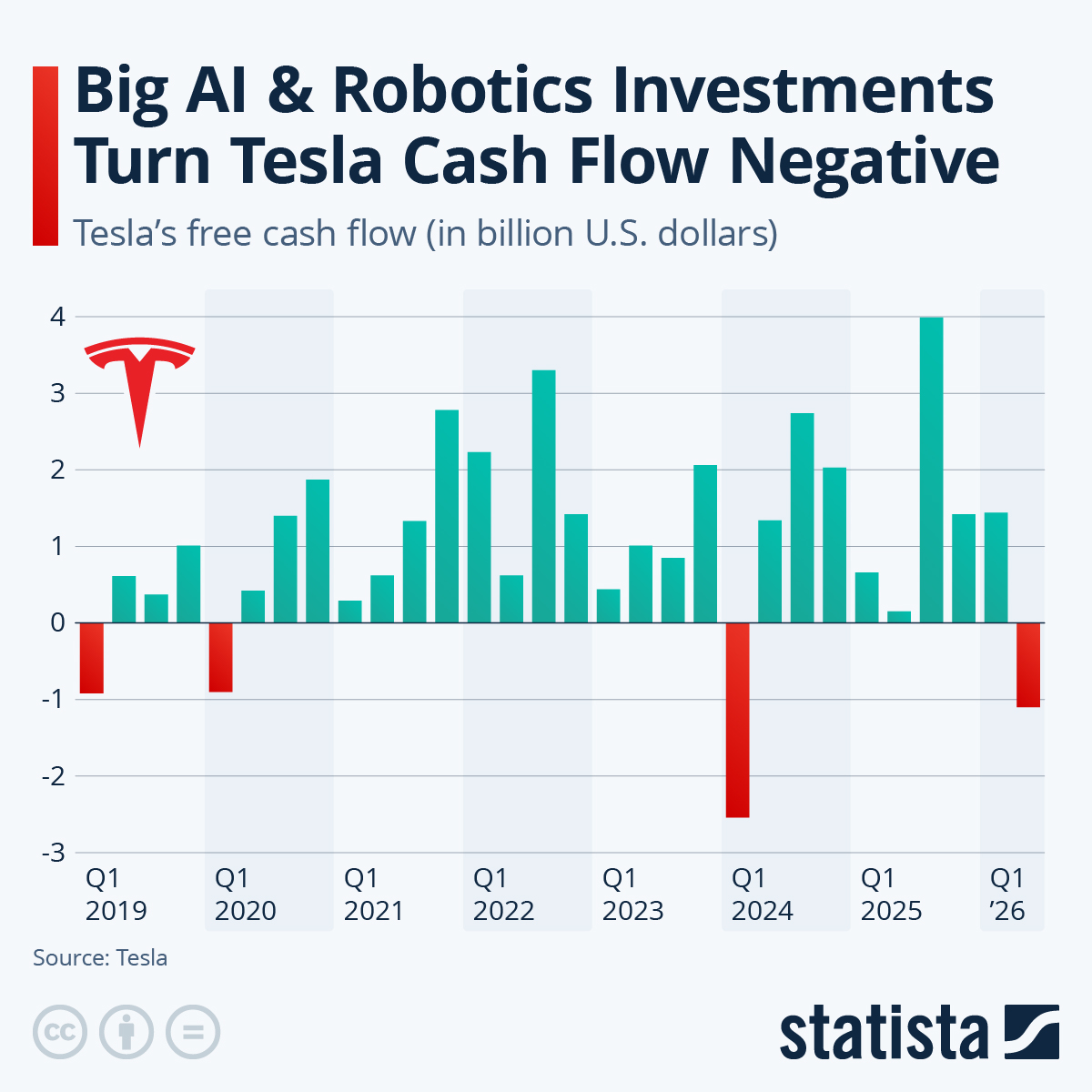
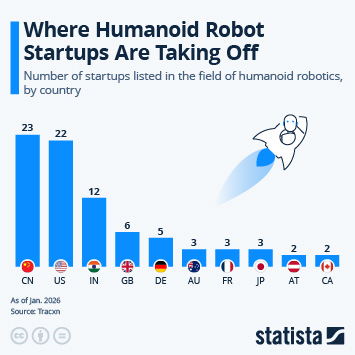
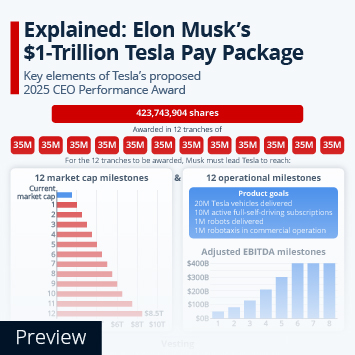
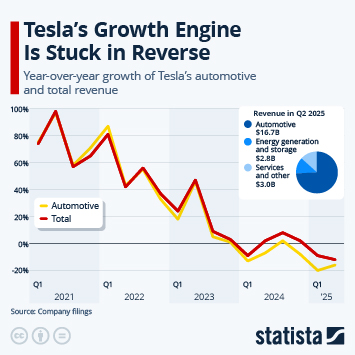
Tesla reported its Q2 results yesterday and the figures, as expected, show massive investments made in the fields of robotics and self-driving cars. Capital expenditures approached $6 billion for the quarter and are expected to exceed $25 billion for the full year as the company continues to test its humanoid robot Optimus and just expanded self-driving taxi service to two more U.S. cities.
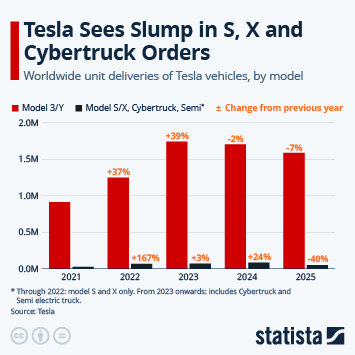
However, both projects are behind schedule, resulting in nervous investors and a stock price that is under pressure for the first time in two years. As investments pile up, Tesla's core automotive business is not as lucrative as it used to be. Tesla also missed its earning expectations, reporting higher-than-projected revenues of $28.2 billion for the quarter, but earnings before interest, taxes, depreciation and amortization (EBITDA) at only $3.3 billion when $4 billion had been expected. The operating margin of the company sank to 1.4 percent and to 16.7 percent in the automotive segment.
In Q1 of 2024, Tesla had last seen its investments exceed its profits as more AI spending coincided with delivery disruptions and inventory buildup. Smaller cash flow issues happened in Q1 of 2019 and Q1 of 2020 at the start of the Covid-19 pandemic.