Will they or won't they? That was main question going into Tesla鈥檚 annual shareholder meeting on November 6 that was centered around a shareholder vote on a new compensation package for long-time CEO Elon Musk, a package potentially worth an unprecedented $1 trillion. The answer was a resounding yes. Despite some vocal opposition, the proposal passed with over 75 percent approval, Tesla said.
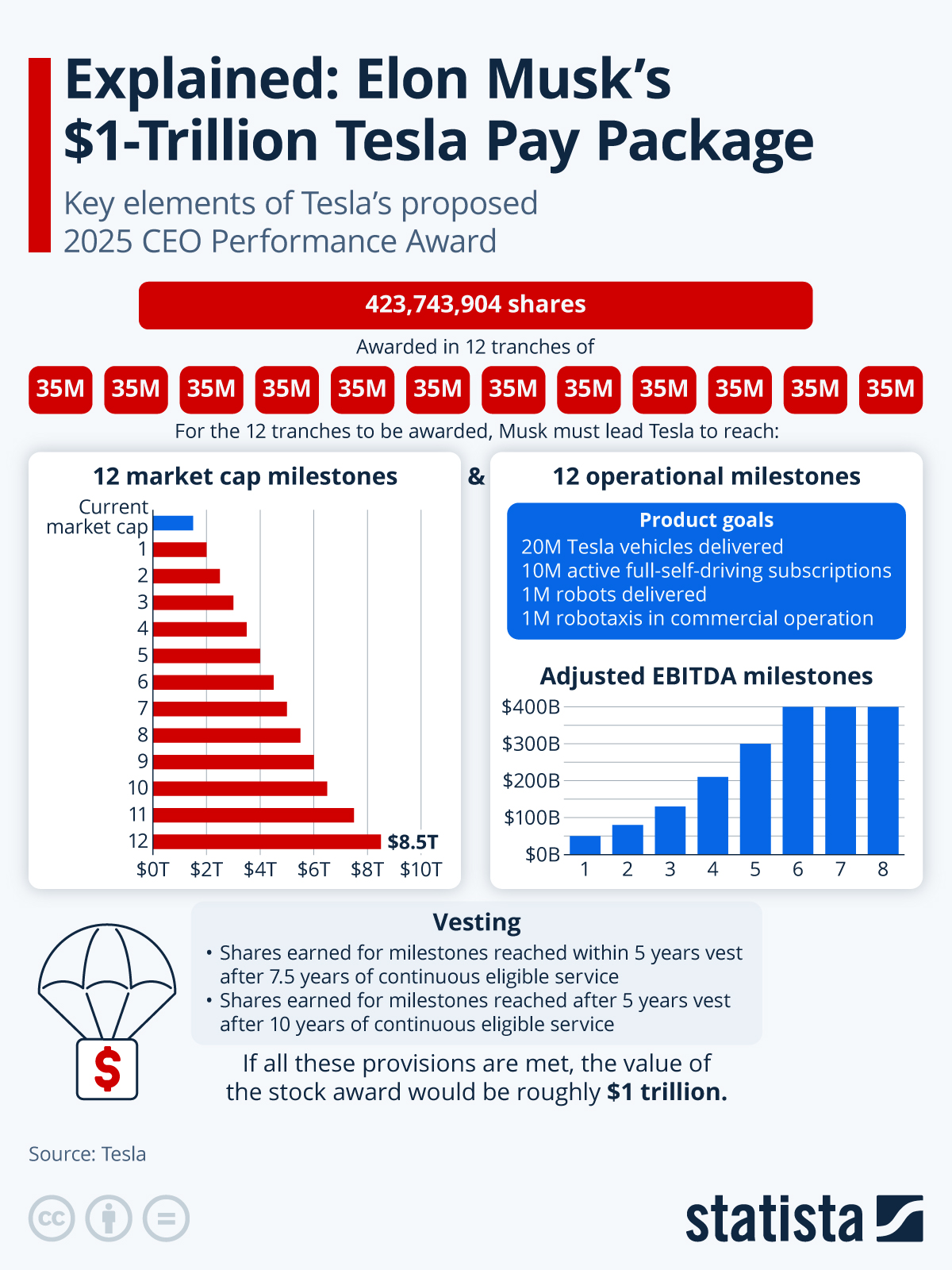
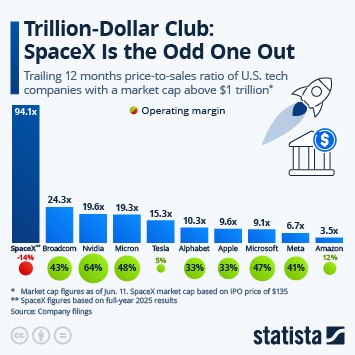
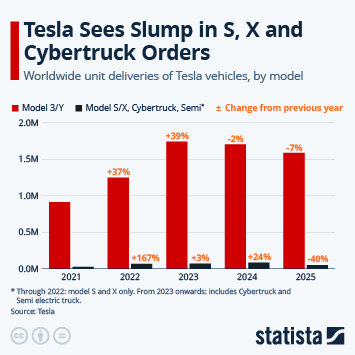
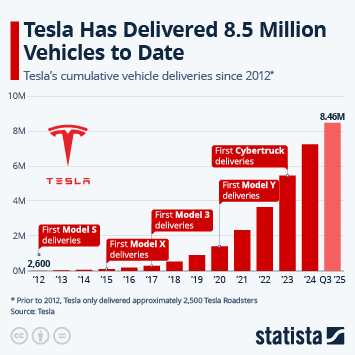
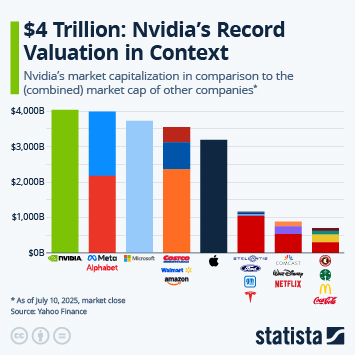
The new pay package, unveiled by Tesla鈥檚 board of directors in September, grants Musk up to 424 million additional shares to take his stake in the company to around 25 percent. For Musk to earn the full payout, though, he has to help Tesla reach several highly ambitious, borderline impossible goals. For each of the 12 equally sized tranches of stock grants, the board has set a market capitalization milestone, which must be paired with the achievement of one of 12 operational milestones, which include certain EBITDA goals as well as delivery targets. Tesla must pass all of these milestones, while growing to a market capitalization of $8.5 trillion for the proposed package to reach the widely reported value of $1 trillion 鈥� a scenario that seem highly unlikely from today鈥檚 point of view.
While Tesla鈥檚 board of directors believes that the proposed compensation plan would 鈥渋ncentivize Elon to focus his energies on Tesla鈥�, something that hasn鈥檛 always been the case in the past, there was some pushback against the unprecedented scale of the potential payout. Just days ahead of the vote, Norway鈥檚 sovereign wealth fund, one of Tesla鈥檚 largest shareholders with a 1.2 percent stake in the company, announced that it would vote against the proposed compensation package, citing concerns 鈥渁bout the total size of the award, dilution, and lack of mitigation of key person risk.鈥�
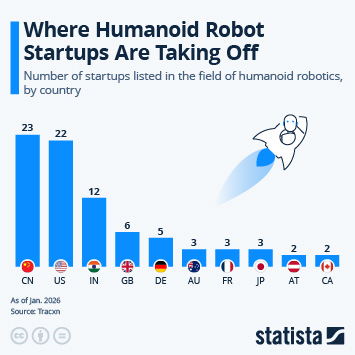
During Tesla鈥檚 last earnings call in late October, Elon Musk had made the case for his new pay package, arguing it was more about influence than it was about money for him. 鈥淚t's called compensation, but it's not like I'm going to go spend the money,鈥� Musk said. With respect to Tesla鈥檚 work on humanoid robots, Musk said he wouldn鈥檛 be comfortable continuing that work if he feared losing control over it. 鈥淚f I go ahead and build this enormous robot army, can I just be ousted at some point in the future? That's my biggest concern,鈥� he said.
Musk currently holds a 13 percent stake in the company, which, in his opinion, doesn鈥檛 give him enough control. In his own words, Musk wants 鈥渆nough voting control to give a strong influence, but not so much that I can't be fired if I go insane,鈥� a sweet spot that he sees met under the new compensation plan. The shareholders did their part, now it's up to Musk to deliver on the ambitious goals laid out in the plan.