It is the essence of the American Dream: If you work hard, you can succeed in life, no matter where you come from. In reality, things often aren鈥檛 as straightforward though, and inherited circumstances play a large role in determining a person鈥檚 economic outcome. A new titled 鈥淭o Have and Have Not 鈥� How to Bridge the Gap in Opportunities鈥� not only quantifies inequality of opportunity across OECD member countries and accession candidates but also looks at how much different factors tilt what should be a level playing field.
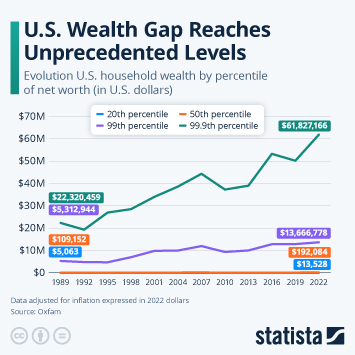
According to the OECD鈥檚 findings, factors that are beyond an individual鈥檚 control such as sex, place of birth and parental socio-economic background still have a large and lasting influence on people鈥檚 chances in life, explaining up to 50 percent of household income disparities in some countries. At a relative inequality of opportunity of 41.5 percent, the United States, home of the American Dream, is the worst-performing OECD country, underperformed only by OECD accession candidates Romania (42.0 percent) and Bulgaria (49.8 percent). These findings, along with the fact that income inequality has been rising for decades in the U.S., add fuel to the argument that the American Dream is more myth than reality and that widely shared 鈥渇rom rags to riches鈥� stories merely gloss over the systemic issues that leave millions of people disadvantaged.
At the other end of the scale, the Nordics 鈥� including Iceland, Denmark, Finland and, to a lesser degree, Sweden 鈥� perform significantly better than the OECD average in terms of creating equal opportunities for all. In Iceland and Denmark, little more than 10 percent of household income disparities can be attributed to factors that people inherit rather than earn through merit. On average, across OECD countries, over a quarter of income inequality can be traced back to circumstances beyond people鈥檚 control, highlighting that the 鈥渓ottery of life鈥� still plays a large role in determining where people end up economically.