Global air traffic is responsible for around . In order to improve the sector鈥檚 climate footprint, the (IATA), which represents around 340 airlines around the world and over 80 percent of global air traffic, has committed to achieving net-zero carbon emissions by 2050.
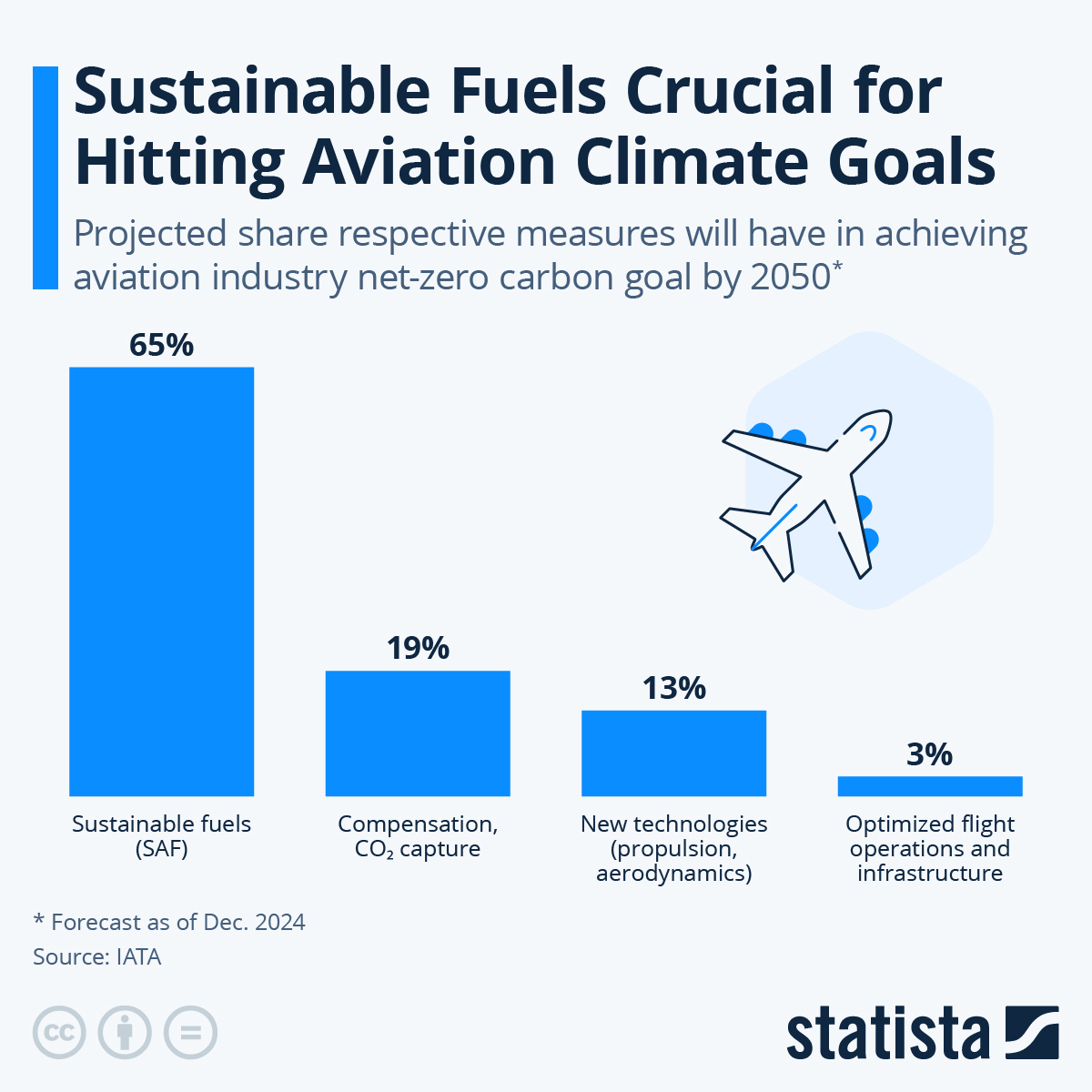
According to the group, the best ways for the aviation industry to hit its goal will be not only through new propulsion technologies and improvements to air traffic navigation, but crucially, through the use of sustainable aviation fuels (SAFs). These liquid fuels are currently used in commercial aviation and can reduce CO2 emissions by up to 80 percent. As data from a recent shows, SAFs will be the main means by which the industry will be able to achieve its climate targets by 2050.
SAFs can be produced from various sources, including waste fats, oils and greases, municipal solid waste, agricultural and forestry residues, wet wastes, as well as non-food crops cultivated on marginal land. They are considered sustainable because the source or feedstocks 鈥渄o not compete with food crops or output, nor require incremental resource usage such as water or land clearing, and more broadly, do not promote environmental challenges such as deforestation, soil productivity loss or biodiversity loss鈥�, according to IATA.
Aside from being sustainable, another of the fuel鈥檚 major advantages is that the aircraft used today do not need to be modified to use it. The main sticking point, however, is the price: SAFs are currently more than twice as expensive as regular jet fuel made from fossil fuels and are only available in limited quantities. To ensure that sustainable fuels come onto the market despite these disadvantages, the EU has decided on mandatory blending quotas for sustainable fuels from 2025 as well as plans to in the sector.
This chart and article was originally by Data Journalist Matthias Jansen.