The global energy crisis brought about by Russia's invasion of Ukraine has increased interest in alternative energy sources, including nuclear, around the world. The age of nuclear infrastructure, the fact that the technology had entered a phase-out mode in many nations and the continued resistance to new nuclear projects complicates a quick u-turn for many nuclear programs, however.
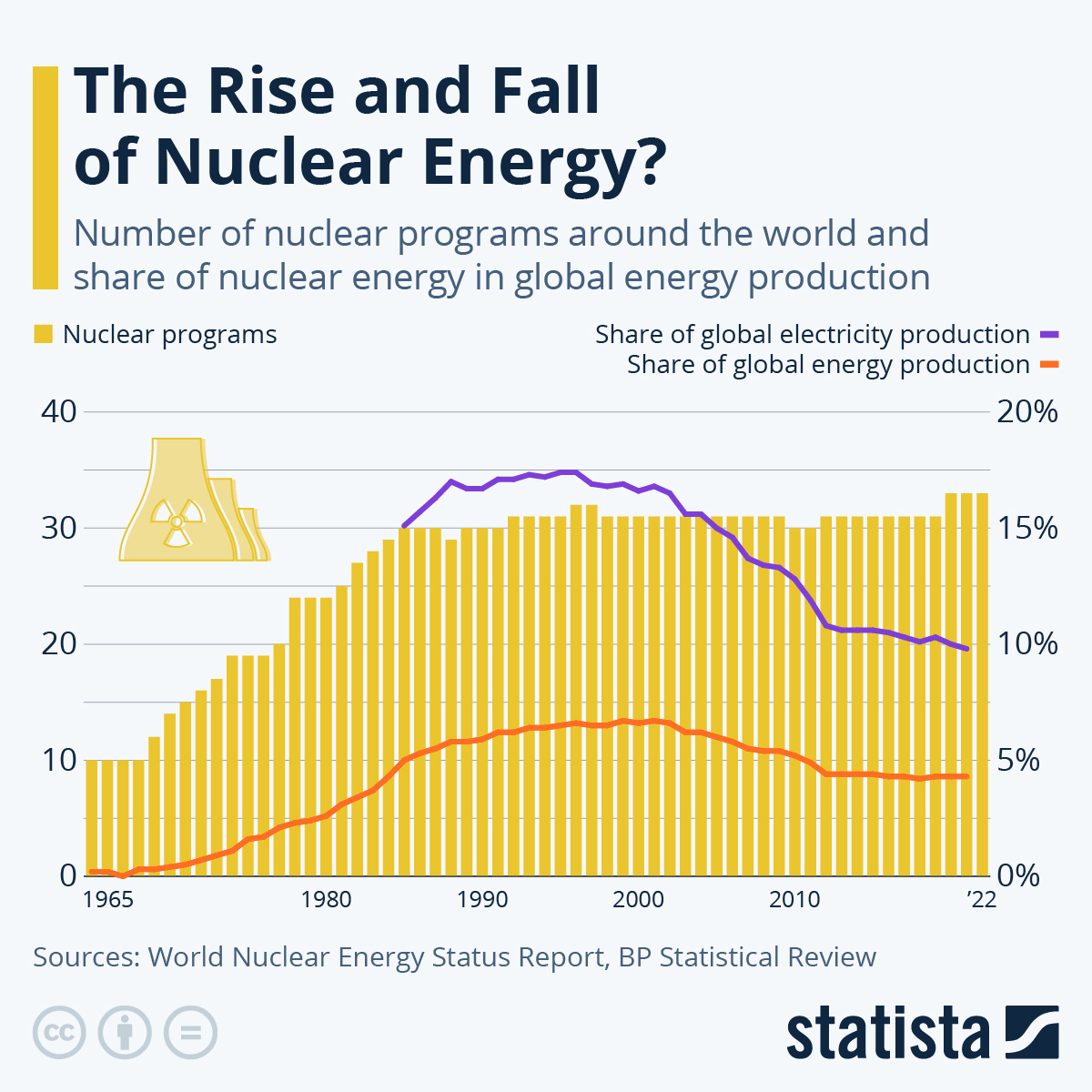
As seen in data by the , most nuclear energy programs were started in the 1970s, a fact that reflects in the age of nuclear reactors today. Despite some nuclear programs having ended (and many more scheduled for phase-out), the number of nuclear programs in the world has plateaued for many decades as some nations still take up the technology, most recently the United Arab Emirates and Belarus in 2020. Poland at the end of October announced that it is looking to. Around that time, six other nuclear programs - among them the ones in Belgium, Germany, Switzerland and Spain - will be scheduled to have shut down, even though this could now be subject to change. Balancing out a dip in nuclear programs could be , which is discussing taking up the technology again under its new right-wing government despite abandoning and even outlawing it after the 1986 Chernobyl disaster. More u-turns are possible in and .
Some small steps towards nuclear extension are happening in countries known for die-hard opposition to nuclear energy, but they are facing the expected roadblocks. the ability to use its remaining three reactors until April 2023 among a lively public debate. Originally, the country had planned to shut off all reactors by the end of this year. In Japan, which reduced the number of operating reactors significantly since the Fukushima disaster in 2011, some reactors are approaching 60 years of age - the former lifespan cap that with due to the current circumstances. In Belgium, where mean reactor age is above 40 years, the September shut-off of one reactor failed, while the government extended the end-of-life of three others from 2023 to 2025 after the invasion of Ukraine and might
Despite the plateau in nuclear energy programs, the relative importance of the technology has still decreased as the capacity of other energy types outgrew nuclear. In 2021, the technology produced less than 10 percent of global electricity, down from a high of 17.4 percent in 1995 and 1996. Looking at all of the world's energy needs, not just electricity, nuclear