Deputy President William Ruto won Kenya鈥檚 presidential election on Monday with 50.5 percent of the vote. Opposition leader and former Prime Minister Raila Odinga came in a close second, with 48.8 percent. Ruto had been deputy president for a decade and it was his first time running for president. It was Odinga鈥檚 fifth time vying for the role.
Odinga鈥檚 side has raised claims of vote rigging following the announcement. But otherwise, according to the , there鈥檚 a general sense of relief that the results have been finalized, after the country had come to a standstill with schools closed ever since election day on August 9.
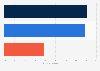
So what do Kenyans hope for from the next government? According to data collected in November and December of 2021 by , a pan-African, non-partisan survey research network, the key issues Kenyans are concerned with are the management of the economy, corruption, unemployment, health, and crime and security.
Management of the economy rose to become the primary concern of voters last year, after having ranked as the sixth most important issue between 2014 and 2019. Ruto is entering a tricky financial climate, as Kenya鈥檚 inflation rate has risen to its highest point since 2017 and unemployment rates are thought to have hit 13.8 percent, as reports. The war in Ukraine has exacerbated the situation, as Kenya imports one third of its wheat from Russia, pushing up food prices. The last government鈥檚 tax hikes on cooking oil and gas as well as on mobile phone and data usage have been hitting lower income households the hardest, according to the .
Corruption, which our chart shows was the second most pressing issue to voters, has stayed in either first or second place for the past six years. According to , Kenya ranked 128th out of 180 countries on the corruption index in 2021.
In the same survey, AfroBarometer found that 85 percent of respondents said that the last government was doing 鈥渇airly badly鈥� or 鈥渧ery badly鈥� at creating jobs, as 83 percent felt they were failing on improving living standards of the poor, 83 percent on managing the economy, and 77 percent on fighting corruption. By contrast, respondents were more positive about the last government鈥檚 efforts to maintain roads and bridges (63 percent said they were doing 鈥渇airly well鈥� or 鈥渧ery well鈥�) and addressing educational needs (65 percent).