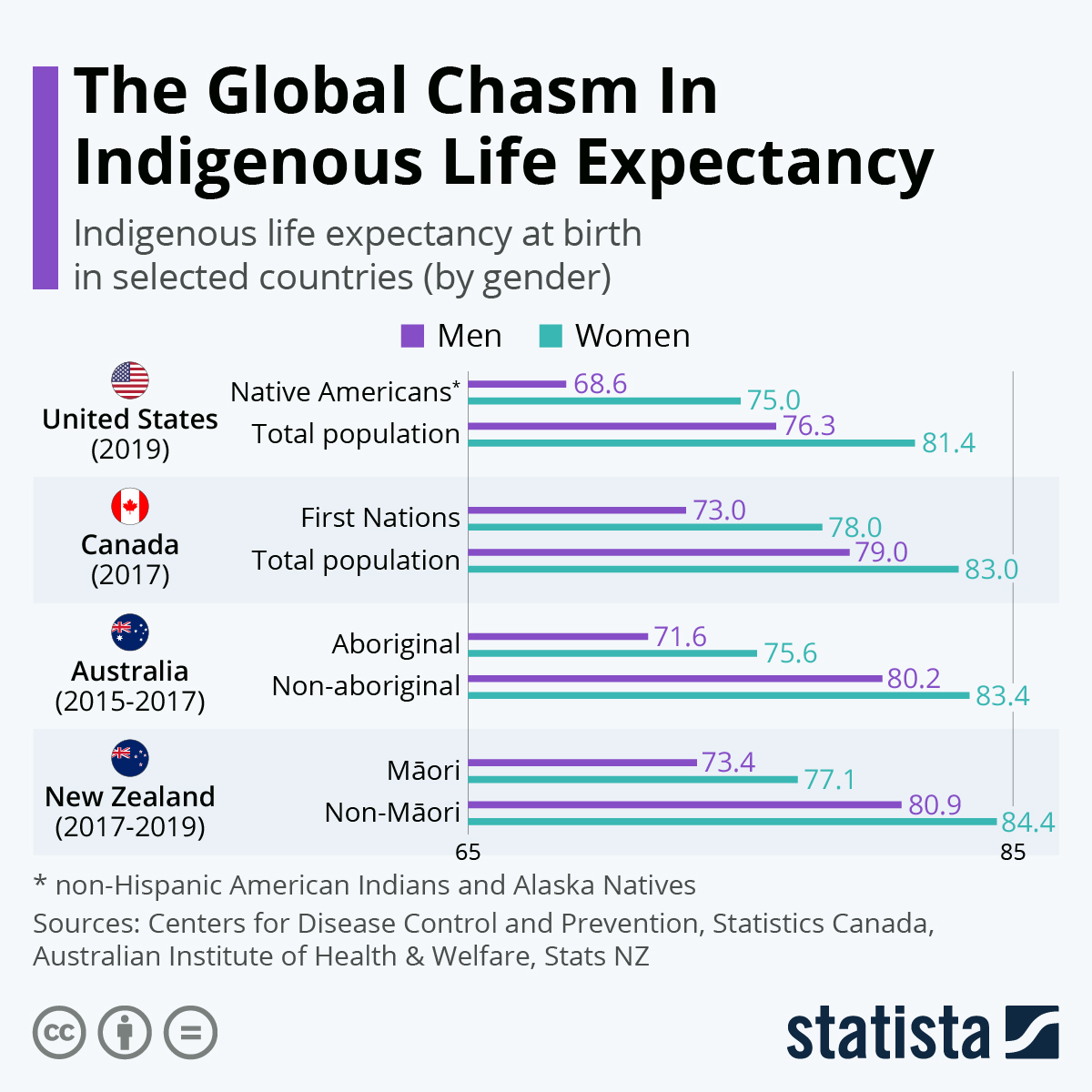
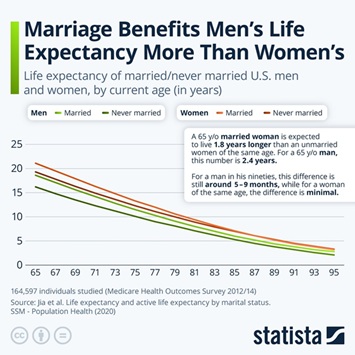
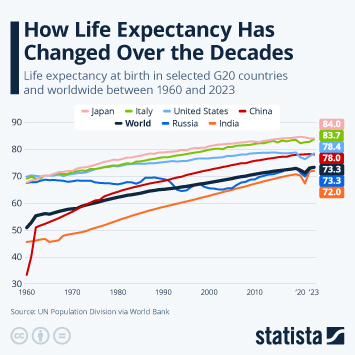
In the United States, Canada, Australia and New Zealand, the life expectancy of indigenous people is still significantly lower than that of the non-indigenous population or the population overall.
The harrowing gulf in life expectancy can be attributed to a range of socio-economic factors like lack of access to education, generational poverty and life in disadvantaged regions, which are in turn a legacy of centuries of systemic discrimination. Rural indigenous communities also often lack critical healthcare infrastructure that could provide prophylactic and acute illness care.
In Australia, for example, aboriginal males had a life expectancy of 71.6 years in the period from 2015 to 2017 while non-aboriginal males were expected to live until 80.2 - a difference of almost nine years. The chasm in life expectancy was almost as large in the , where in 2019 almost eight years lay between the life expectancy for non-Hispanic American Indian or Alaska Native males and that of the male