Ahead of the polls opening for the Lok Sabha general elections on Thursday in India, political ads and fake news on social messengers, especially WhatsApp, have been a major topic of debate. BJP party officials have even dubbed the event the 鈥淲hatsApp elections鈥�. The party has set up hundreds of thousands of WhatsApp groups across the country and are using targeted messaging to reach certain demographics, . India鈥檚 lax data protection laws are helping, making it easy to obtain mobile phone numbers.
The messaging service is also the tool of choice for the spread of fake news about the elections, which is targeting voters through similar avenues. , false information is also not absent from political chat groups set up by several major parties.
WhatsApp has already limited its forwarding capacity to five recipients at a time, following a violent incident in India in July 2018 that was connected to fake news on its network. The limitation has since been rolled out globally. The service also invested in a public awareness campaign about fake news, teaching people to block contacts and exit groups.
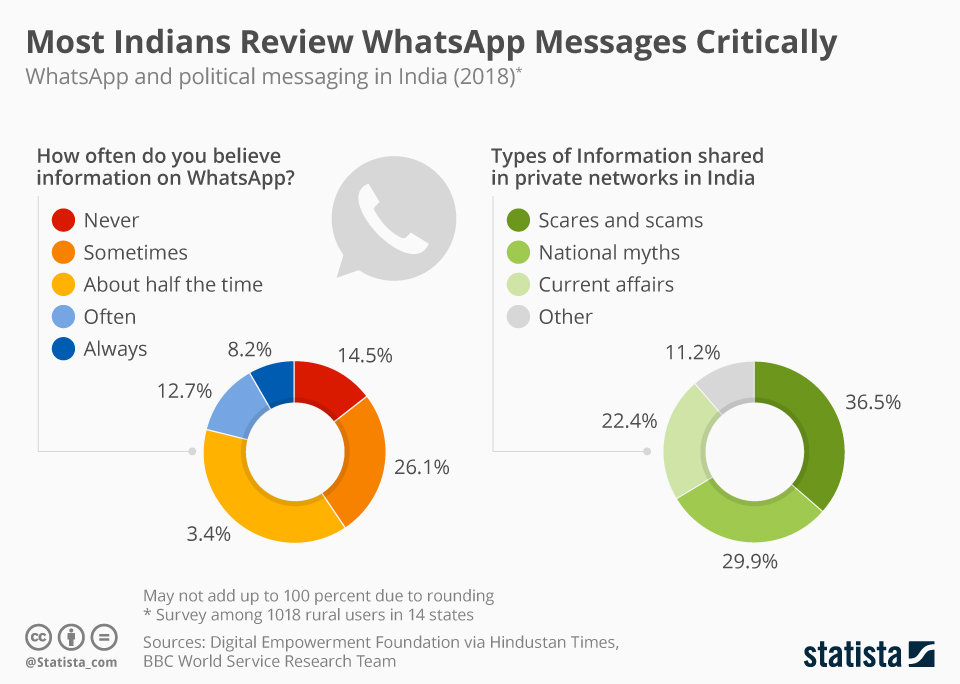
the message has gotten across to a majority of Indians. Around 80 percent of respondents from rural areas said they didn鈥檛 believe the bulk of messages they receive. 40 percent said they were a member in a WhatsApp group set up by a political party. Almost 40 percent said they received more than 10 forwarded messages a day.
Lok Sabha
India鈥檚 WhatsApp Elections

Description
This chart shows rural Indians trust in forwarded WhatsApp messages as well as the make up of messages on WhatsApp in India.


