India鈥檚 roads have been filling up with taxis over the last decade as its ride-hailing market gets more and more accessible. But on these ride-hailing roads, it seems there is no coming between the two giants - Ola and Uber.
Ola has the home advantage over its U.S. counterpart. Established in 2011, Ola has a wider geographical network than Uber. With a presence in 110 cities, the Ola app probably has a higher reach because of its provisions for a handful of regional languages. The tailor-made needs of allowing cash payment and providing different economic classes of cabs as well as auto-rickshaws gives Ola the edge. Since 2016, it has also overcome India鈥檚 unstable data connectivity by allowing bookings via text messages.
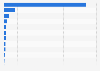
According to figures from Kalagato (by Quartz), the Bangalore-based company currently enjoys a market share of 56.2 percent. Now, it is reaching for a share of the global market, with plans to expand to Sri Lanka, Nepal, Bangladesh and Australia.
India
Ola at full throttle in India's ride-hailing market


Description
This chart shows the share of the ride hailing market in India as of December 2017, by company.