lululemon athletica - statistics & facts
For a long time, the global sportswear market has been primarily dominated by brands from the United States and Germany. That is until a Canadian challenger entered the ring and became one of the biggest names in the industry. lululemon athletica Inc. is a manufacturer and retailer of yoga-inspired athletic apparel based in British Columbia. With annual revenue figures of about 350 million U.S. dollars back in 2008, lululemon鈥檚 global sales have grown consistently and reached over eleven billion U.S. dollars during its 2025 fiscal year. This is almost double the amount generated just four years earlier. Although the company is predominantly known for its up-market women鈥檚 leggings and yoga pants, lululemon also markets a menswear range, swimwear goods, and yoga equipment. Recently, lululemon even launched its first footwear products.
lululemon athletica worldwide
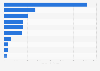
Since its foundation in 1998, lululemon has successfully expanded throughout North America, Europe, Asia, and Oceania. As of January 2026 (the end of the company's 2025 financial year), the United States held almost 400 of the enterprise's international stores. Canada used to account for the second-highest number of locations, however, the country has recently been overtaken by China, which held over 170 stores. The number of lululemon retail stores worldwide came to more than 800 that year.
The country with the highest share of outlets unsurprisingly accounted for the highest share of revenue. Close to 70 percent of lululemon sales were generated in Canada and the United States alone. The remainder was divided between China and the rest of the world about equally. This distribution of net revenue also reflects lululemon's global workforce to a degree: of the roughly 39,000 people employed by lululemon athletica,聽just under half were based in the United States. And like the customer base, the majority of the company鈥檚 workforce was made up of women.
The rise of e-commerce
Over the years, lululemon's e-commerce segment grew exponentially. 2020 marked the first time the company had generated more of its net revenue through its direct-to-consumer channel than with its corporate-owned stores. DTC sales made up just over half of the total, while the company's physical stores generated less than 40 percent of the revenue. While the coronavirus pandemic may have had a positive impact on lululemon's online sales that year, the spike was not simply a fad, as the DTC segment remained just as lucrative as the physical store segment ever since.
Among the world's leading sportswear companies, lululemon's forecasted athletic apparel sales were projected to grow by 10.3 percent in 2026, the highest rate among major industry players, outpacing rivals including Nike and Adidas. From a yoga-wear boutique in Vancouver to a global brand spanning apparel, accessories, and footwear, lululemon built that position without waiting for the incumbent giants to make room for it.