
Matej Mikulic
Research expert covering health, pharma & medtech
Artificial intelligence in healthcare has moved beyond experimentation into a phase of structured investment and scaled deployment. Building on earlier momentum around diagnostics and workflow automation, the market is now increasingly shaped by AI-first strategies, particularly following the rise of generative AI. Investment patterns reflect this shift: while overall digital health funding has normalized after pandemic peaks, AI-focused segments continue to attract a disproportionate share of capital, with market revenues projected to grow strongly over the coming years, reflecting sustained demand for AI-enabled healthcare solutions. At the same time, providers and payers are prioritizing use cases that deliver measurable efficiency gains鈥攕uch as clinical documentation, triage support, and imaging analysis鈥攊ndicating a transition from hype to ROI-driven adoption.
The increasing relevance of AI is mirrored in its growing adoption across healthcare systems and among medical professionals. Globally, nearly half of clinicians reported using AI for work-related purposes in 2025, with adoption rates particularly high in regions such as South America and Asia-Pacific. In the United States, adoption has expanded rapidly, with usage rates in some specialties exceeding 60 percent and overall prevalence rising sharply within just a few years. Younger physicians tend to adopt AI more readily, suggesting continued growth as digital-native cohorts enter the workforce. At the same time, general practitioners increasingly rely on generative AI for administrative and clinical support tasks, highlighting how AI is becoming embedded in everyday medical workflows rather than remaining a specialized tool.
AI applications in healthcare are rapidly expanding, spanning administrative efficiency, clinical decision support, and patient engagement. Physicians are increasingly using AI for tasks such as documentation, care plan generation, and medical research summaries, with some use cases already adopted by a majority of practitioners or expected to be implemented in the near term.聽The rise of ambient AI tools, such as automated note-taking systems, further illustrates how AI is reducing administrative burdens and streamlining workflows. Beyond clinical settings, patient-facing applications are also gaining traction: a notable share of consumers report using AI chatbots for health information, with many taking follow-up actions such as consulting providers or changing health behaviors. This broadening of use cases underscores AI鈥檚 transition from isolated innovation to a pervasive layer across healthcare delivery.
Artificial intelligence in healthcare is transitioning from broad experimentation to more targeted, value-driven deployment. Industry analyses show providers prioritizing applications that address operational constraints鈥攅specially administrative burden and workforce shortages鈥攐ver complex clinical use cases. This aligns with rising uptake of tools such as documentation assistants and workflow automation, which deliver clearer short-term returns than autonomous diagnostics.
At the same time, scaling remains tied to data infrastructure and governance. Markets with more centralized health data ecosystems, such as China, are better positioned to accelerate implementation. However, concerns around data privacy, transparency, and clinical validation continue to shape adoption. As regulatory frameworks mature, AI will expand further into clinical decision-making, though unevenly, balancing innovation with trust and accountability.
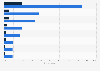
Detailed statistics
AI products known and used by clinicians worldwide in 2024

Detailed statistics
Share of digital health funding on AI-focused companies worldwide 2015-2024

Detailed statistics
Changes in AI use in healthcare in selected European countries as of 2024
Share of digital health funding on AI-focused companies worldwide 2015-2024
Share of funding in the digital health industry on AI-focused companies worldwide from 2015 to 2024

Adoption of AI in medical technology worldwide 2024, by area
Distribution of AI technology adoption in the medical technology industry worldwide 2024, by area
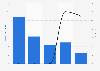
Digital health funding on ventures with AI worldwide 2021-2025
Total funding on digital health ventures leveraging AI and funding as a share of total digital health funding worldwide from 2021 to H1 2025

Digital health and medical device partnerships with AI worldwide 2020-2024
Distribution of digital health and medical device partnerships using AI technology worldwide from 2020 to 2024
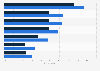
Potential of GenAI and multiagent workflows in healthcare in the United States 2025
Share of healthcare organizations who cited the following areas with potential improvement with GenAI and multiagent workflows in the United States as of 2025

Clinicians who have used AI for their work worldwide in 2025, by region
Distribution of clinicians who have used AI for their work worldwide in 2025, by region
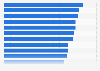
Physicians' adoption of AI in healthcare in the U.S. 2026, by specialty
Share of physicians who used AI in their clinical practice in the United States as of 2026, by specialty
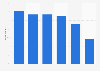
Physicians' adoption of AI in healthcare in the U.S. 2026, by age
Share of physicians who used AI in their clinical practice in the United States as of 2026, by age
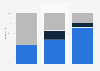
AI use in physicians' practices U.S. 2023-2026
Distribution of AI use in physicians' practices in the United States from 2023 to 2026
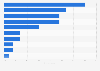
Reasons for using GenAI among GPs in the United Kingdom 2025
Share of general practitioners who used GenAI tools in healthcare for the following reasons in the United Kingdom as of 2025
Clinicians who have used AI for their work worldwide in 2025, by region
Distribution of clinicians who have used AI for their work worldwide in 2025, by region
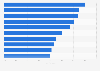
AI use cases in physicians' practices U.S. 2026
Share of physicians who were already using or expected to use by the end of the year the following AI use cases in the U.S. as of 2026
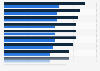
Physicians' adoption of ambient note-taking in the U.S. 2025-2026, by specialty
Share of physicians who used ambient note-taking in the United States in April 2025 and January 2026, by specialty
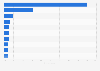
Most commonly used AI tools used by physicians in the United States 2025
Share of physicians who used the following AI tools in healthcare in the United States as of 2025
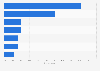
Use of AI chatbots for health information in the United States 2025
Share of adults who used the following AI chatbots for health information in the United States in 2025
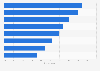
Actions taken after consulting AI chatbots for health reasons in the U.S. 2025
Share of adults who took the following actions after interacting with AI chatbots for health information in the United States as oif 2025
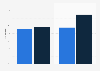
Physican comfort with AI use in their practice in the U.S. 2025-2026, by generation
Share of physicians who felt comfortable with the use of AI in their practice in the United States in 2025 and 2026, by generation
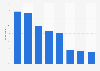
Physicians' excitement about the impact of AI in healthcare in the U.S. 2026
Share of physicians who were excited about AI in healthcare for the following reasons in the United States as of 2026
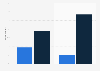
Attitudes of the public and NHS staff towards AI impact on healthcare in the UK 2025
Attitudes of the public and NHS staff towards the impact of AI on the quality of care in the United Kingdom as of 2025
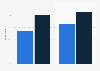
Support of NHS using AI in healthcare in the UK 2025
Share of support among public and NHS staff for uses of AI in healthcare in the United Kingdom (UK) as of 2025
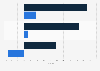
Attitudes towards healthcare AI safety for patients in the UK 2025
Net support among public and NHS staff in regards to AI and patient safety in the United Kingdom (UK) as of 2025
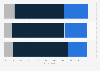
Physicians' opinion on AI impact on burnout and workload in the United States 2026
Distribution of physicians' opinions on the impact of AI on burnout, workload, and "pajama time" in the United States as of 2026
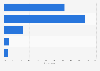
Physicians' views on AI making them better at their job in the U.S. 2025
Distribution of physicians who thought AI was making them better or worse at their job in the United States as of 2025
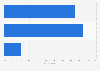
Physicians' views on AI making them more likely to stay in medicine in the U.S. 2025
Distribution of physicians who thought that AI will make them more or less likely to stay in medicine in the United States as of 2025
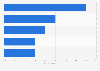
Most common hopes among physicians for AI in healthcare in the U.S. 2025
Share of physicians who cited the following hopes for AI use in healthcare in the United States as of 2025
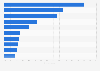
Main priorities of AI use for physicians in the United States 2025
Share of physicians who cited the following priorities for AI in healthcare in the United States as of 2025
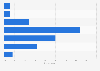
Expected ROI in healthcare GenAI use United States 2025
Distribution of expected ROI for GenAI among healthcare organizations in the United States as of 2025
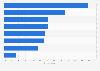
Cited barriers to scaling GenAI in healthcare in the United States 2025
Share of healthcare organizations who cited the following barriers to GenAI scaling in the United States as of 2025
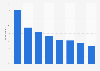
Physicians' concerns about the use of AI in healthcare in the U.S. 2026
Share of physicians who cited the following barriers or concerns about using AI in healthcare in the United States as of 2026
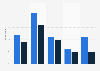
AI use for health advice and not following up with a doctor in the United States 2026
Share of adults who used AI for health information but did not follow up with a doctor in the U.S. as of 2026, by age
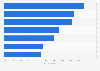
Reasons for using AI tools for health information and advice in the U.S. 2026
Share of adults who had used AI for health information for the following reasons in the past year in the U.S. as of 2026
Feel free to contact us anytime. We will respond to your inquiry as quickly as possible.


