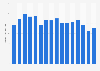
| Characteristic | Beijing | Shanghai | Guangzhou | Wuhan | Chengdu | Shenyang | Nanjing | Har'bin | Suzhou | Qingdao |
|---|---|---|---|---|---|---|---|---|---|---|
| - | - | - | - | - | - | - | - | - | - | - |
| - | - | - | - | - | - | - | - | - | - | - |
| - | - | - | - | - | - | - | - | - | - | - |
| - | - | - | - | - | - | - | - | - | - | - |
| - | - | - | - | - | - | - | - | - | - | - |
The chart is not accessible to screen readers. Please switch to the table view to access the data.
October 2017
China
March 2017
3,000 respondents*
25-45 years
of the surveyed cities, focus groups were held only in Shanghai and Chengdu
Face-to-face interview, online survey
*Middle-class parents in ten major cities in mainland China who have children under the age of six, at the same time, consumers who have purchased at least three categories of baby and child products in the past year.
Middle-class is defined differently by region, with monthly household income:
In Beijing, Shanghai and Guangzhou: RMB 15,000 or above;
In Chengdu, Wuhan, Shenyang, Nanjing and Changsha: RMB 9,000 or above;
In Suzhou and Qingdao: RMB 7,000 or above.
鈥淏aby and child products鈥� used in this survey refers to products used by babies and children under the age of six that belong to the following six categories:
food, clothing, toys, sanitary care products, daily-use articles and furniture.