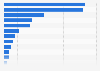
| Characteristic | Debt as percentage of GDP |
|---|---|
| - | - |
| - | - |
| - | - |
| - | - |
| - | - |
| - | - |
| - | - |
| - | - |
| - | - |
| - | - |
| - | - |
| - | - |
| - | - |
The chart is not accessible to screen readers. Please switch to the table view to access the data.
September 2019
Netherlands
2006 to 2018
All figures provided are provisional
The source adds the following information: "the debt of the private sector includes the total debt of households, non-profit institutions and non-financial corporations. The debts includes only securities (excluding shares and derivatives) and loans, and are consolidated, i.e. debts within the same sector are not included.
A high debt increases the vulnerability of the private sector to changes in economic conditions, interest rates or inflation. Part of the outstanding debt must be refinanced periodically. Rising interest rates may lead to higher periodic interest payments for borrowers. A worsening economic situation may persuade banks to tighten their conditions with respect to collateral. As a result households may receive lower mortgage loans with potential implications for the developments on the housing market and in the construction sector. For this indicator, the European Commission has set only an upper limit: +133 percent."