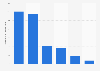
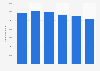
| Characteristic | Residual | Dry recycling | Organics |
|---|---|---|---|
| - | - | - | - |
| - | - | - | - |
| - | - | - | - |
| - | - | - | - |
| - | - | - | - |
| - | - | - | - |
| - | - | - | - |
| - | - | - | - |
| - | - | - | - |
| - | - | - | - |
| - | - | - | - |
| - | - | - | - |
| - | - | - | - |
The chart is not accessible to screen readers. Please switch to the table view to access the data.
Download
Source
Source
Release date
January 2024
More information
Region
United Kingdom (England)
Survey time period
2010 to 2022
Supplementary notes
Residual waste includes waste from households regular collections and rejects from recycling.
Dry recycling includes paper and card, glass, plastic, waste electrical and electronic equipment, scrap metals as well as other materials.
Organics includes green garden waste, mixed garden and food waste, wood for composting and other compostable waste.
This statistic is using original data from the Department for Environment, Food and Rural Affairs and includes copyright material from 漏 Crown, licensed under the
Citation formats