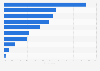
| Main Indicators | Value* (1 = highly insufficient, 9 = highly sufficient) |
|---|---|
| - | - |
| - | - |
| - | - |
| - | - |
| - | - |
| - | - |
| - | - |
| - | - |
| - | - |
| - | - |
| - | - |
| - | - |
| - | - |
The chart is not accessible to screen readers. Please switch to the table view to access the data.
February 2025
United States
2024
36 experts
data is composed of the National Expert Survey
Questionnaire
Values of indicators are based on averaging the Z-scores (standardized values) for the economies in each of the three phases of economic development.
Indicators:
Access to entrepreneurial finance: Sufficient funds are available to new startups, from informal investment and bank loans to government grants and venture capital.
Government policy: taxes & bureaucracy:. Government policies promote entrepreneurship and support those starting a new business venture.
Government policy: support & relevance: Business taxes and fees are affordable for the new enterprise. Rules and regulations are easy to manage, without undue burden on the new business.
Government entrepreneurship programs. Quality support programs are available to the new entrepreneur at local, regional and national levels.
Entrepreneurial education at school: Schools are introducing ideas of entrepreneurship and instilling students with entrepreneurial values such as enquiry, opportunity recognition and creativity.
Entrepreneurial education post-school: Colleges, universities and business schools offer effective courses in entrepreneurial subjects, alongside practical training in how to start a business.
Research and development transfer:. Research findings, including from universities and research centers, can readily be translated into commercial ventures.
Commercial and professional infrastructure: There are sufficient affordable professional services such as lawyers and accountants to support the new venture, within a framework of property rights.
Ease of entry: market dynamics: There are free, open and growing markets where no large businesses control entry or prices.
Ease of entry: market burdens and regulations: Regulations facilitate, rather than restrict, entry.
Cultural and social norms: National culture encourages and celebrates entrepreneurship, including through the provision of role models and mentors, as well as social support for risk-taking.
GEM uses two principal research instruments: the Adult Population Survey (APS), a random sample of at least 2,000 adults, and a National Expert Survey (NES) of at least 36 national experts.