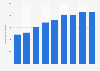
| Characteristic | Benefits in million U.S. dollars |
|---|---|
| - | - |
| - | - |
| - | - |
| - | - |
| - | - |
| - | - |
| - | - |
| - | - |
| - | - |
| - | - |
| - | - |
| - | - |
| - | - |
| - | - |
| - | - |
| - | - |
| - | - |
| - | - |
| - | - |
| - | - |
| - | - |
| - | - |
| - | - |
| - | - |
| - | - |
| - | - |
| - | - |
| - | - |
| - | - |
| - | - |
| - | - |
| - | - |
| - | - |
| - | - |
| - | - |
| - | - |
| - | - |
| - | - |
| - | - |
| - | - |
| - | - |
| - | - |
| - | - |
| - | - |
| - | - |
| - | - |
| - | - |
| - | - |
| - | - |
| - | - |
| - | - |
October 2019
United States
2017
data may not include second injury fund for all states and may understate total payments.
* South Carolina's State Accident Fund is not a competitive state fund.
** In 2008, West Virginia completed the transition from an exclusive state fund to a competitive fund. All benefits for workers injured after the transition are paid by private carriers.
States with exclusive funds (North Dakota, Ohio, Washington, and Wyoming) may have small amounts of benefits paid by private carriers. This is because some employers doing business in states with exclusive funds may be required by Longshore and Harbor Workers' Compensation Act (LHWCA) provisions to obtain coverage from private carriers, or may obtain employer's liability coverage that the state fund is not authorized to provide. In addition, private carriers may provide excess compensation coverage in some of these states.
Figures have been rounded.