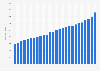
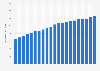
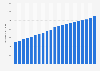
| Characteristic | Average age of recipients |
|---|---|
| - | - |
| - | - |
| - | - |
| - | - |
| - | - |
| - | - |
| - | - |
| - | - |
| - | - |
| - | - |
| - | - |
| - | - |
| - | - |
| - | - |
| - | - |
| - | - |
| - | - |
| - | - |
| - | - |
| - | - |
| - | - |
| - | - |
| - | - |
| - | - |
| - | - |
| - | - |
| - | - |
| - | - |
| - | - |
| - | - |
| - | - |
The chart is not accessible to screen readers. Please switch to the table view to access the data.
Download
Source
Source
Release date
March 2026
More information
Region
United States
Survey time period
1995 to 2025
Special properties
at year of award action.
Supplementary notes
OASDI: Social Security's Old-Age, Survivors, and Disability Insurance program.
*The source notes: "In response to a March 1997 audit by the Social Security Administration (SSA) Office of the Inspector General, notifications of eligibility for higher benefits were mailed to approximately 200,000 surviving spouses, resulting in higher numbers for 1997. SSA subsequently initiated the Widow(er)'s Insurance Benefits/Retirement Insurance Benefits (WIB/RIB) outreach program to identify and notify surviving spouses who are eligible for higher retirement benefits at FRA and age 70."
Citation formats