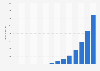
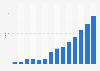
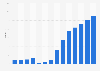
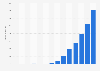
| Characteristic | Revenue in EUR |
|---|---|
| - | - |
| - | - |
| - | - |
| - | - |
| - | - |
| - | - |
| - | - |
| - | - |
| - | - |
| - | - |
| - | - |
| - | - |
| - | - |
| - | - |
The chart is not accessible to screen readers. Please switch to the table view to access the data.
July 2024
Estonia, Latvia, Lithuania
2016 to 2023
based on data modelling from August 2024.
The Electric Vehicles market includes information about electric vehicles in countries where, according to our sources, a public electric vehicle charging infrastructure is already available. In this context, 鈥減ublic鈥� means that people have unrestricted access to the charging infrastructure. A vehicle can be defined as electric if it is self-contained with a battery or classified as a plug-in hybrid. All key figures shown represent the sales of new cars, and their basic configuration in the respective year. The figures do not include the sale of used vehicles nor adapted equipment for the new cars sold. The prices and revenues shown are accordingly based on the basic models. The Electric Vehicle market is divided into distinct two distinct markets, namely Battery Electric Vehicles (BEVs) and Plug-in Hybrid Electric Vehicles (PHEVs). This categorization allows for a nuanced understanding of the market dynamics, considering the specific attributes and market penetration of each electric vehicle type. The emphasis on new car sales and their foundational configurations ensures clarity, while the exclusion of used vehicles and customizations maintains focus on the evolving landscape of electric vehicles.