| Characteristic | Share of repondents |
|---|---|
| - | - |
| - | - |
| - | - |
The chart is not accessible to screen readers. Please switch to the table view to access the data.
January 2023
Algeria, Iraq, Jordan, Kuwait, Lebanon, Libya, Mauritania, Qatar, Saudi Arabia, Sudan, Tunisia, Egypt, MENA
June to December, 2022
33,300 respondents
18 years and older
respondents are from 14 countries
Face-to-face interview
Note: survey methodology can be found which can be found on page 2 is as follows: 鈥淭he 2022 Arab Opinion Index (AOI) is the eighth in a series of public opinion surveys conducted across the Arab world by the Arab Center for Research and Policy Studies, of which Arab Center Washington DC is an affiliate. The 2022 AOI is based on findings from face-to-face interviews conducted between June and December 2022 with 33,300 individual respondents in 14 Arab countries.鈥�
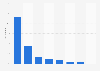
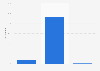
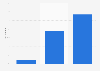
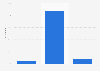
The original research question was phrased as follows: "Would you support or oppose diplomatic recognition of Israel by your country?"
Middle East and North Africa (MNEA) is referred to as "Arab countries" in the survey. MENA countries included in the survey are: included in the survey Algeria, Egypt, Iraq, Jordan, Kuwait, Lebanon, Libya, Mauritania, Morocco, Palestinian Territories, Qatar, Saudi Arabia, Sudan, and Tunisia.
The Arab Maghreb (including Mauritania, Morocco, Algeria, Libya, and Tunisia), the Nile Valley (including Egypt and Sudan), the Levant/ Arab Mashreq (including Palestinian Territories, Lebanon, Jordan, and Iraq), and the Gulf Cooperation Council (GCC) (including Saudi Arabia, Kuwait, and Qatar).
Sampling followed a randomized, stratified, multi-stage, self-weighted clustered approach, giving an overall margin of error between +/- 2 % and 3% for the individual country samples. The overall samples guarantee probability proportional to size (PPS), Ensuring fairness in the representation of various population segments. With an aggregate sample size of 33,300 respondents, the Arab Opinion Index remains the largest public opinion survey in the Arab world. Fieldwork was carried out by an overall team of 920 individuals, equally balanced
by gender, who conducted 72,000 hours of face-to-face interviews. The team covered a total of 890,000 kilometers (approximately 553,000 miles) across the population clusters sampled.