| Characteristic | Participation rate in further training |
|---|---|
| - | - |
| - | - |
| - | - |
| - | - |
| - | - |
| - | - |
| - | - |
| - | - |
| - | - |
| - | - |
| - | - |
| - | - |
| - | - |
The chart is not accessible to screen readers. Please switch to the table view to access the data.
September 2021
Germany
1991 to 2020
5,455*
18-64 years**
Computer-assisted personal interviews (CAPI)
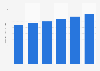
The present time series is based on the Reporting System for Continuing Education (Berichtssystem Weiterbildung (BSW)), which was carried out every three years in the time period from 1979 to 2007, and the Adult Education Survey (AES), which was conducted from 2007 to 2018. The AES is used in the European Union as well as in Germany to monitor lifelong learning in terms of educational policy and has replaced the previously nationally collected BSW in Germany in favor of better international comparability. According to the source, the range of what is recorded as further professional training in both approaches is comparable in the results, despite the break between BSW and AES. More information on the background of this statistic can be found in the linked source (page 6ff).
* The sample numbers vary between the surveys. The specified number of cases relate to the current AES survey with data from 2018. BSW: 1991: n =7,152, 1994: n =7,011, 1997: n =7.,071, 2000: n =7,043, 2003: n =7,108, 2007: n =3,570; AES: 2007: n =7,346, 2010: n =7,035, 2012: n =7,099, 2014: n =3,100, 2016: n =7,102).
** The age range of the respondents varies between AES and BSW. During the survey period up until 2007 the respondents were aged between 19 and 64, starting 2010 they were between 18 and 64 years old.