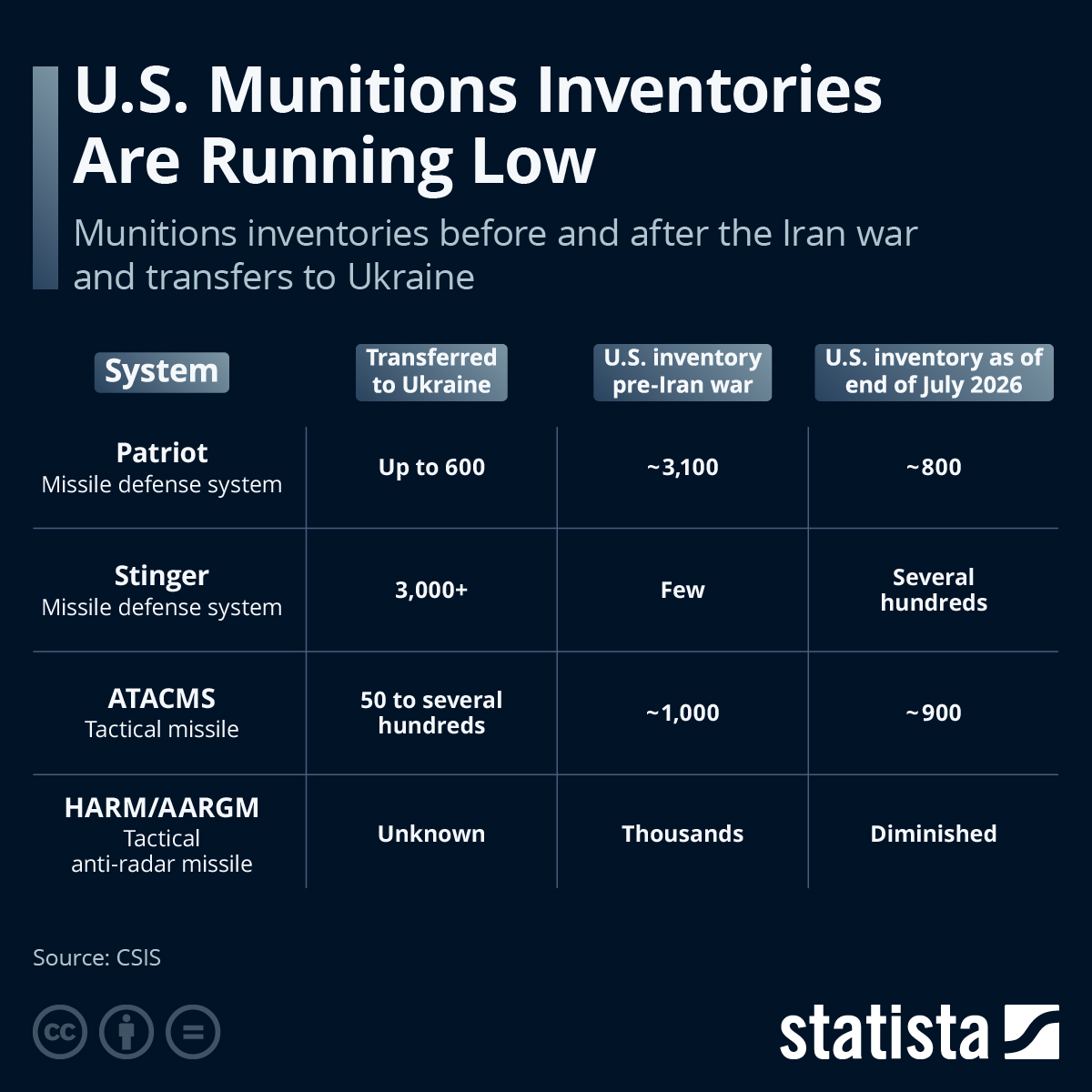
U.S. military munitions stockpiles have shrunk significantly over the course of the war with Iran. For only one out of four weapon systems where the U.S. made donations to Ukraine and also used it in Iran, the Ukraine war was the main cause for inventory depletion. Overall, operations in Iran were the main factor.
For instance, the inventory of Patriot interceptor missiles dropped from around 3,100 units prior to the war with Iran to approximately 800 by the end of July 2026. Previously, only up to 600 had been supplied to Ukraine. Other systems show a similar trend: Stockspiles of thousands of tactical anti-radar HARM and AARGM missiles have been depleted since the start of the Iran war. While the number that went to Ukraine previously is unknown, the CSIS calls its influence on stockpiles minor.
About 900 tactical offensive ATACMS missiles remain available, down from roughly 1,000 before the start of the Iran war. In this case, the influence of the Iran and Ukraine war could be about equal. In the case of Stinger air defense missiles, Ukraine donations were the main reason for U.S. inventory depletion.
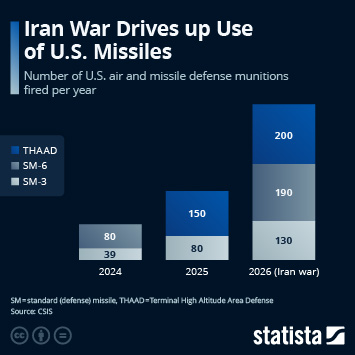
Since 2024, various factors have placed a strain on U.S. arms supplies, also including intensive operations against the Houthi militia. Concurrently, long-range precision weapons such as Tomahawks and JASSMs were also deployed in several operations, equally diminishing these stockpiles. This trend is closely linked to the sharply increased consumption of modern missiles, as shown in another CSIS analysis regarding the use of SM-3, SM-6 and THAAD systems during the war with Iran.
Of particular strategic importance is the fact that the four munition types shown in the graphic would also be required in a potential conflict with China. According to CSIS, a significant portion of the original stockpiles for these key systems has already been expended. These dwindling reserves could limit the United States' ability to wage multiple conflicts simultaneously. Rebuilding stockpiles over the long term and expanding production capacities are therefore likely to become increasingly important.