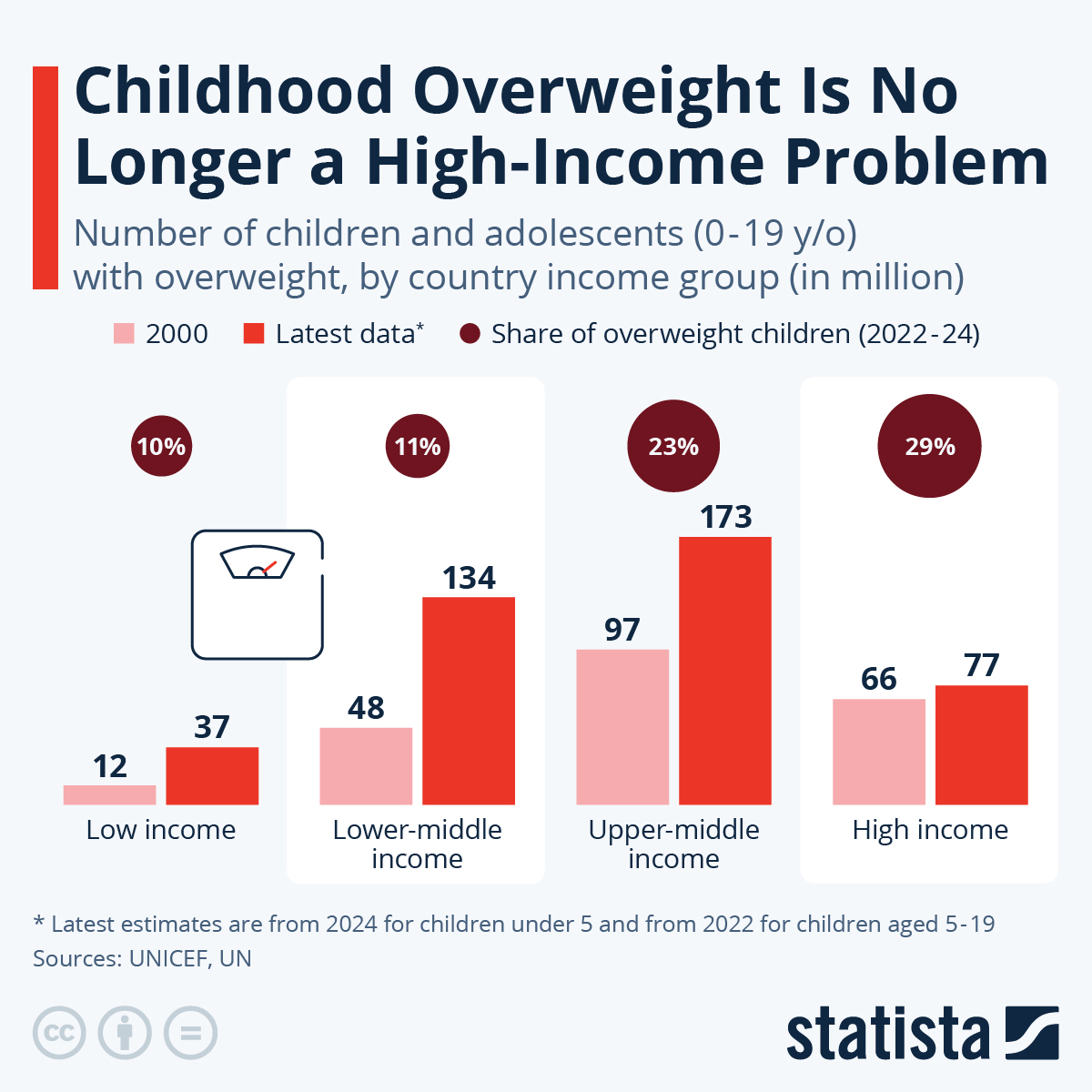
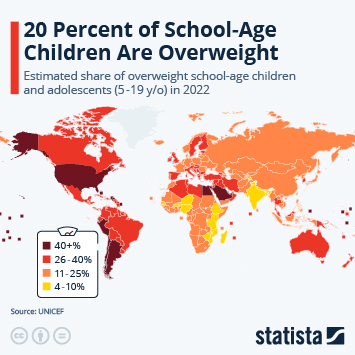
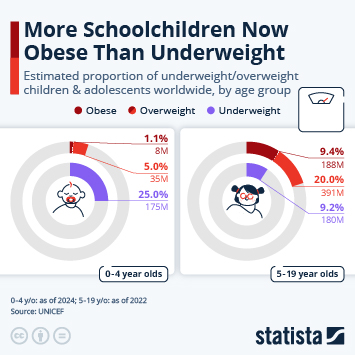
According to the latest , obesity has overtaken underweight as the most common form of malnutrition among school-aged children for the first time ever, with sub-Saharan Africa and South Asia the only regions bucking this trend. Still, the report finds that overweight and obesity among children are no longer limited to high-income countries. Instead, the report found a steep increase in the number of overweight children in low- and middle-income countries between 2000 and 2022/2024, as our chart shows. UNICEF attributes this trend, that it calls 鈥渢he changing child malnutrition landscape鈥�, to 鈥渦nhealthy food environments鈥� and the growing prevalence of highly processed foods. 鈥淗igh in sugar, refined starch, salt, unhealthy fats and additives, these foods have become cheap, easy and appealing. Digital marketing gives the food and beverage industry powerful access to young audiences, and the market is saturated; children and adolescents are bombarded by these products everywhere, from shops to schools and digital spaces鈥�, the report notes.
The comparatively higher cost of healthy foods is another factor contributing to this trend, often forcing cash-strapped parents to feed their children with cheap, energy-dense food instead of fruit, vegetables or other healthy options. 鈥淣utritious and affordable food must be available to every child to support their growth and development. We urgently need policies that support parents and caretakers to access nutritious and healthy foods for their children,鈥� Catherine Russell, UNICEF executive director said. 鈥淚n many countries we are seeing the double burden of malnutrition - the existence of stunting and obesity. This requires targeted interventions.鈥�