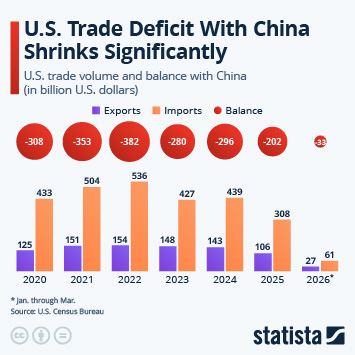
On Tuesday, the Biden administration its plans to increase tariffs on $18 billion worth of imports from China to 鈥減rotect American workers and businesses鈥� from what it considers 鈥渦nfair trade practices鈥�. The new bout of tariffs is targeted at sectors deemed strategic by the White House, including sectors where the Biden administration has invested heavily to create or sustain American jobs.
Perhaps the most noteworthy tariff hike affects electric vehicles, where duties are set to quadruple from 25 percent to 100 percent following a surge in Chinese EV exports over the past few years. Chinese exports of battery electric vehicles (BEVs) have quadrupled since 2021, reaching $34 billion last year. And while the U.S. has so far largely been unaffected by said surge 鈥� the country imported less than $400 million worth of EVs from China last year 鈥� the tariff hike can be seen as a preemptive strike to protect U.S. carmakers from new, potentially unfair competition from abroad.
鈥淲ith extensive subsidies and non-market practices leading to substantial risks of overcapacity, China鈥檚 exports of EVs grew by 70 percent from 2022 to 2023 鈥� jeopardizing productive investments elsewhere,鈥� the White House statement reads, adding that the new tariff rate would protect the Biden administration鈥檚 investments in the EV market as well as jobs in the industry from 鈥渦nfairly priced鈥� Chinese EVs.
The U.S. is not the only country taking offense with China鈥檚 push into what it calls 鈥渘ew energy vehicles鈥�. In October 2023, the European Commission on subsidized electric cars from China, trying to determine whether Chinese BEV value chains benefit from 鈥渋llegal subsidization鈥� that 鈥渃auses or threatens to cause economic injury to EU BEV producers.鈥� Earlier this month, EU trade commissioner Valdis Dombrovskis told Politico that the investigation was 鈥渁dvancing鈥� and that tariffs could be imposed before the summer break.
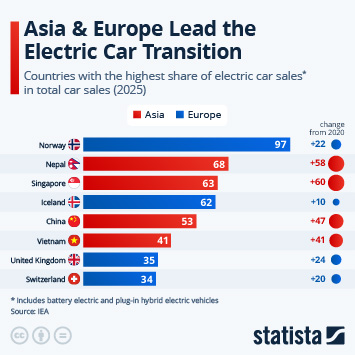
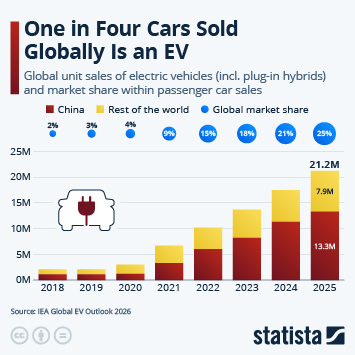
In recent years, China has emerged as the world's largest electric car market. To achieve this, the Chinese government has implemented a series of policies and incentives to promote electric vehicle (EV) adoption, including subsidies, tax breaks and a credit system that requires car makers to meet certain quotas not dissimilar to a carbon credit trading scheme.