When FIFA last year that the 2030 FIFA World Cup would be played in six countries spread across three continents, the reaction was the typical mix of bewilderment and as football鈥檚 global governing body had once again outdone itself in making a decision that seemingly ignores common sense.
While 鈥渃elebrating the centenary of the FIFA World Cup鈥� by playing the first three matches in Argentina, Paraguay and Uruguay, the latter of which hosted the first FIFA World Cup in 1930, sounds like a nice idea on paper, South America is a roughly 12-hour flight away from Spain, Portugal and Morocco, where the rest of the World Cup will be played 鈥� not exactly ideal for athletes who will have to play in South American winter one day and in Europe鈥檚/North Africa鈥檚 summer a couple of days later. Not to mention the ecological footprint of such a global footballing extravaganza.
It wouldn鈥檛 be FIFA if its latest decision would 鈥渙nly鈥� entail some 鈥渓ogistical challenges鈥�, however. Because once again, the organization notorious for corruption has found a creative way to 鈥渇ollow the money鈥�, so to speak. Splitting the 2030 World Cup across three continents and three confederations allows FIFA to fast-track Saudi Arabia鈥檚 hosting ambitions without formally circumventing its own 鈥減rinciple of confederation rotation鈥�. Thanks to the involvement of UEFA (Europe), CAF (Africa) and CONMEBOL (South America) in the 2030 World Cup, the 2034 tournament had to go to Asia or Oceania, despite Qatar having hosted the tournament as recently as 2022. Coincidentally, the Saudi Arabian Football Federation promptly for the 2034 FIFA World Cup 鈥� a bid that went unchallenged because FIFA set the deadline for member associations to confirm their interest just three weeks from the announcement.
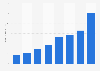
As the following chart shows, the quadrennial FIFA World Cup is not only one of the biggest sporting events in the world, but also FIFA鈥檚 most important source of income. The sale of rights related to the 2022 World Cup in Qatar alone generated $6.3 billion in revenue for FIFA between 2019 and 2022, amounting to 83 percent of the organization鈥檚 total revenue during that period.