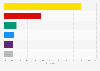
Turkish President Recep Tayyip Erdo臒an has won five more years in power following a tight run-off election on May 28. As the following chart shows, Erdo臒an pulled in 52.2 percent of the vote, while opposition candidate Kemal K谋l谋莽daro臒lu received 47.8 percent - a ratio that speaks to the level of polarization within the country.
K谋l谋莽daro臒lu had been running slightly ahead in the opinion polls earlier in the month, but when it came to the first round of voting dropped behind, receiving 44.5 percent versus Erdo臒an鈥檚 49.5 percent. With none of the candidates reaching the required 50 percent benchmark for an outright win, a second election round took place on Sunday. In the interim, candidate Sinan O臒an, who came third in the first election round, declared his support for Erdo臒an, stating that 鈥渋t is important that the newly elected president is under the same [leadership] as the parliament.鈥�
In the parliamentary elections, which ran alongside the presidential elections, Erdo臒an's Justice and Development Party (AKP) received 35.6 percent of votes. While this was the biggest share of votes of any party, it also represented a loss of around 6.9 percentage points compared to the 2018 election. Meanwhile, the left-wing Cumhuriyet Halk Partisi (CHP) won 25.3 percent of the vote (an increase of around 2.7 percentage points compared to 2018) and the green Ye艧il Sol Parti (YSP) entered parliament for the first time with 8.8 percent.
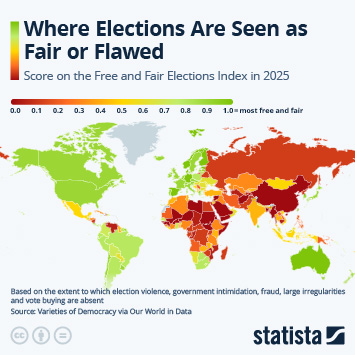
International observers have criticized the election for being heavily influenced by local media bias and ongoing restrictions to freedom of expression which has "" for Erdo臒an.