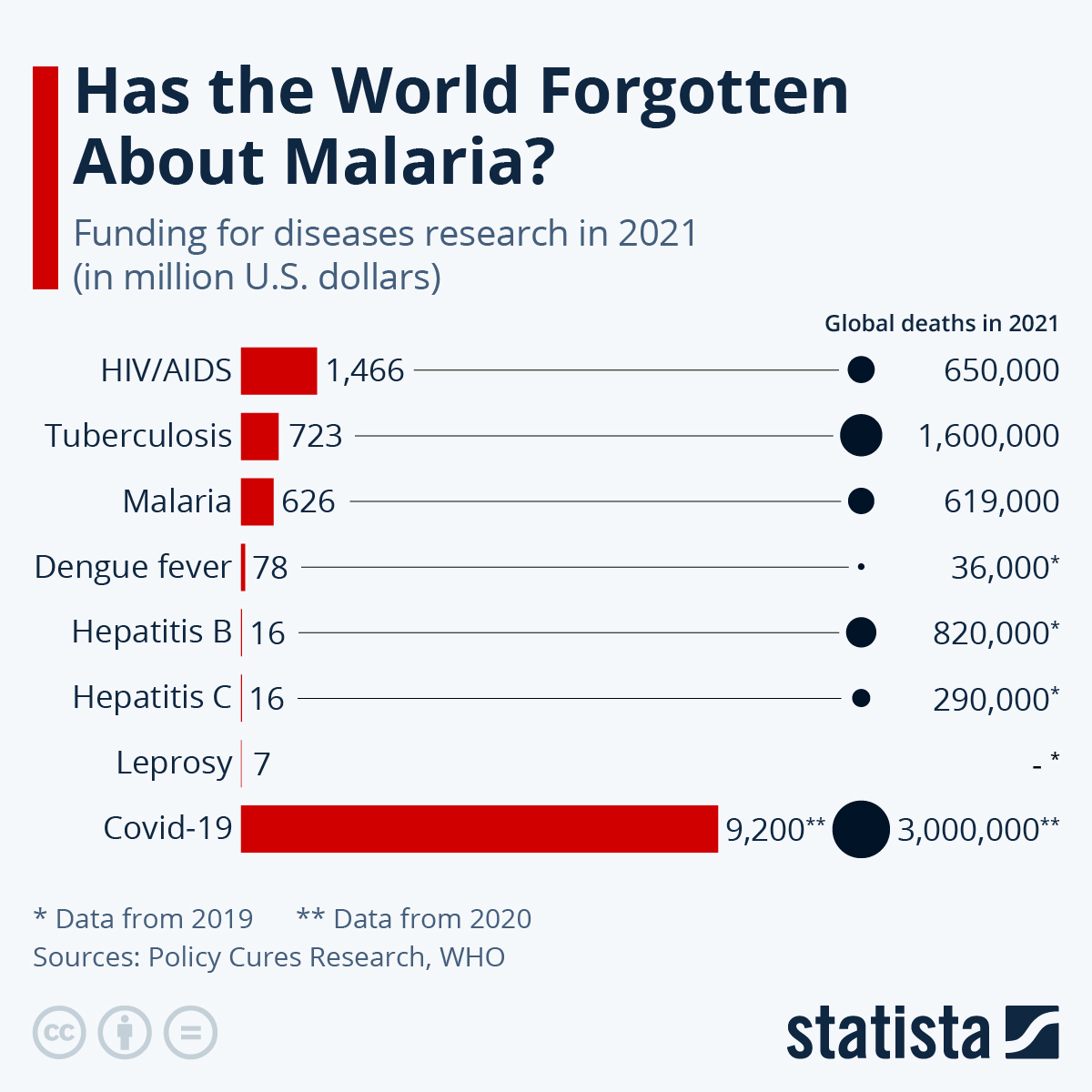
$9.2 billion was pumped into the research and development of Covid-19 vaccines in 2020 - the biggest injection of cash ever raised for a disease鈥檚 R&D in such a short space of time. But what of the other infectious diseases that existed - and killed - long before? How was funding impacted in 2021? Our chart takes a look at what the R&D landscape looked like for the 鈥渂ig three鈥� killers, HIV/AIDS, tuberculosis, and malaria, versus the comparatively 鈥榥eglected diseases鈥�, in the second year of the pandemic.
According to research by , malaria was responsible for 619,000 deaths worldwide in 2021, marking a 10 percent decrease from the year before, while attracting funding of $619 million. In comparison, the outbreak of the Covid-19 pandemic led to a funding surge of $9.2 billion, contrasted with 3 million deaths in its initial year. Research for hepatitis B fared worse still, with only $16 million in funding, despite killing some 820,000 people in 2019. Those disparities can at least in part be explained by the scale of its perceived 鈥渂urden on society鈥�, and whether or not the disease has been 鈥減oliticized鈥� in the eye of the public through media coverage, according to .
Calls have been made for to fight diseases such as HIV/AIDS, tuberculosis, and malaria, as efforts to eliminate them were hampered through the Covid period. According to the , between 2019 and 2020, 鈥渕oderate disruptions in the delivery of malaria services contributed to 14 million malaria cases and 69,000 deaths.鈥� This included disruptions in the distribution of insecticide-treated mosquito nets, with only 58 percent of countries completing their planned campaigns in 2020, as well as in diagnosis and treatment during the pandemic. As an updated report for 2021 shows, the situation didn't further escalate in the second pandemic year, but instead stayed more or less the same as in 2020.