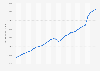
The number of women incarcerated in the U.S. shot up by over 700 percent between 1980 and 2019, according to research and advocacy center , with an increase from 26,378 to 222,455. That鈥檚 over . But since the absolute number of incarcerated women is much lower by comparison, their narrative is often hidden behind wider trends.
One of the main factors behind this dramatic increase can be traced to the draconian policies brought in under The War on Drugs campaign, introduced in the 1970s and intensified in the 1980s and 1990s. Evidence of this impact can be seen in more recent statistics, with 62.7 percent of women in federal prisons in custody for drug offenses as of 2022, according to the .
Under U.S. federal law, women can sometimes be charged for 鈥榗onspiracy鈥� in drug cases even if they played no active role, simply because of their association with someone involved. These sweeping policies have ensnared women in severe mandatory sentences, with many having faced time for crimes committed by romantic partners - a phenomenon which has come to be known as the 鈥溾��.
Racial injustices are also evident. While drug use is relatively consistent across racial and ethnic groups, Black women are almost twice as likely to be incarcerated for drug law violations than white women, and Latina women are over 20 percent more likely to be imprisoned, according to a 2018 report by the Drug Policy Alliance ().
Other policies that directly impact women include the criminalization of sex work and the prosecution of women who respond to gender-based abuse, such as 鈥渄ual鈥� arrests for fighting back against domestic violence, according to the . These patterns suggest that the rise is therefore likely more to do with a failure of policies than an increase in criminal behavior.
While it鈥檚 true that prison populations saw a drop throughout the pandemic years, falling to 152,854 in 2020, the number of incarcerated women has been climbing steadily since. By 2021, 168,449 women were in U.S. jails and prisons, rising to 180,684 in 2022. According to the , the initial decline was due to , as the courts and prisons slowed at the start of the pandemic, rather than more releases.