As the first athletes have arrived in Japan for the upcoming Olympic Summer Games, a cancellation of the event in the light of the coronavirus pandemic seems ever more unlikely despite repeated calls from the Japanese public.
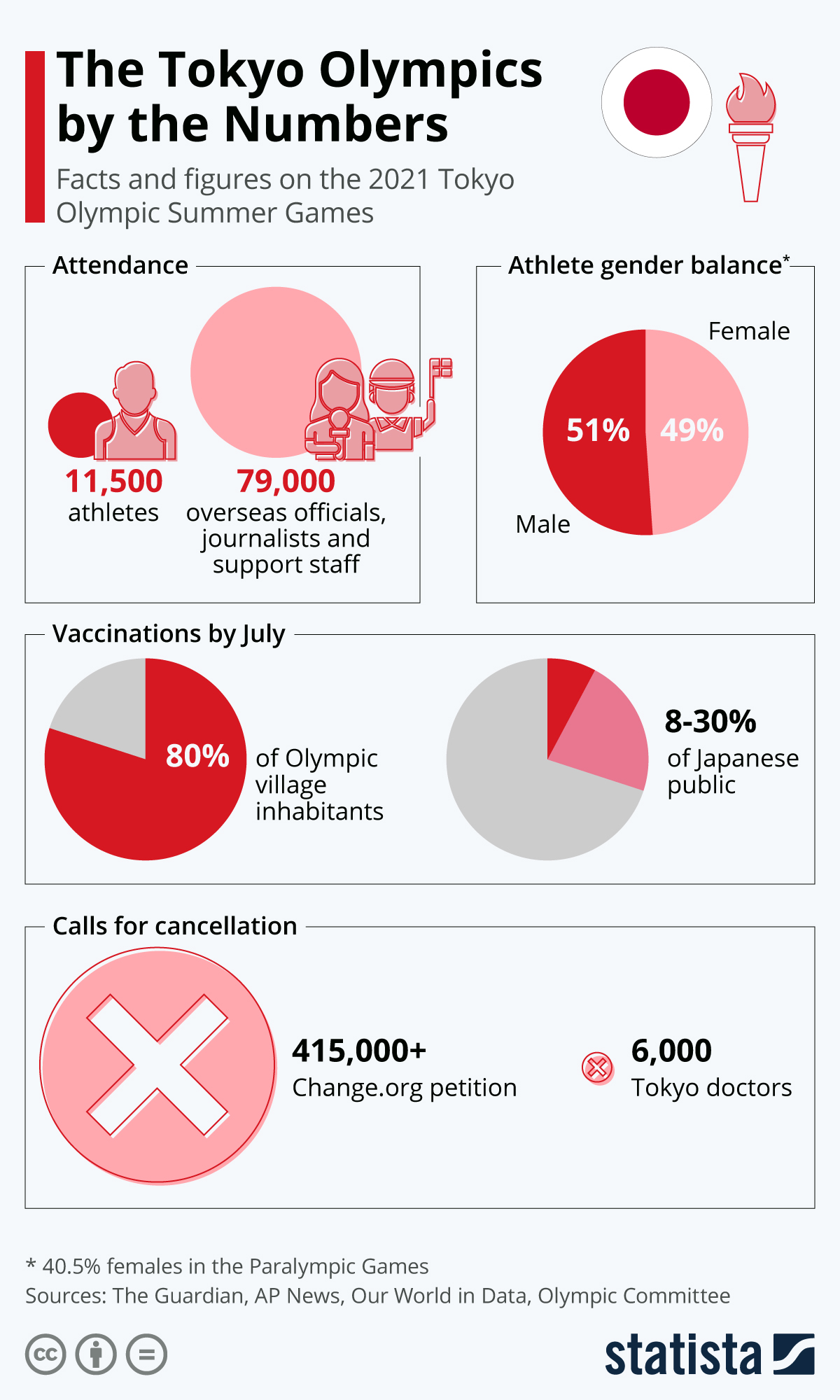
20 players and 10 staff of the arrived in the country on June 1, among the first athletes to do so. When regarding the Games on the whole, the ratio of staff and officials to athletes skews more towards the former, however. are expected to enter Japan from abroad on top of 11,500 athletes competing, creating an influx of people from all over the world into Tokyo despite the ban on international spectators.
The International Olympic Committee said that it expects 80 percent of the people staying in the Olympic village during the Games to have been vaccinated. All athletes have been offered vaccinations through a special deal between the IOC and Pfizer. The Japanese public is vaccinated to a substantially lower degree, however. While the Japanese government is attempting another big vaccine push before the , many doubt that the country can achieve this feat. If Japan carried on with the current speed of vaccinations in the second half of May,
6,000 Tokyo area doctors have called for the Games to be cancelled. currently counted upwards of 415,000 signatures. On a more positive note, the Tokyo Olympic Games are expected thebe the in history with 49 percent females and 51 percent males competing. In the Paralympic Games, the share offemale athletes stands at 40.5 percent, up from the 38.6 percent who competed in Rio in 2016.