90 years ago, on August 10, 1932, a Danish carpenter named Ole Kirk Kristiansen started a company making wooden toys. Renamed LEGO (a combination of the Danish words 鈥淟eg Godt鈥�, i.e. 鈥淧lay Well鈥�) in 1935, the company soon started grappling with plastic bricks, laying the groundwork for the toy company we all know today. In 1958, Godtfred Kirk Christiansen, Ole's son, submitted a patent application for a 鈥渢oy building element鈥� using the iconic studs and tubes that would eventually turn hundreds of millions of children around the world into budding architects.
The day of the patent application, January 28, now marks International Lego Day in celebration of a toy that has bridged generations, sparking creativity in kids and adults alike. With theme parks and movies dedicated to the colorful building blocks and minifigures, LEGO has long evolved into a cultural phenomenon, turning the LEGO Group into one of the largest toy companies in the world.
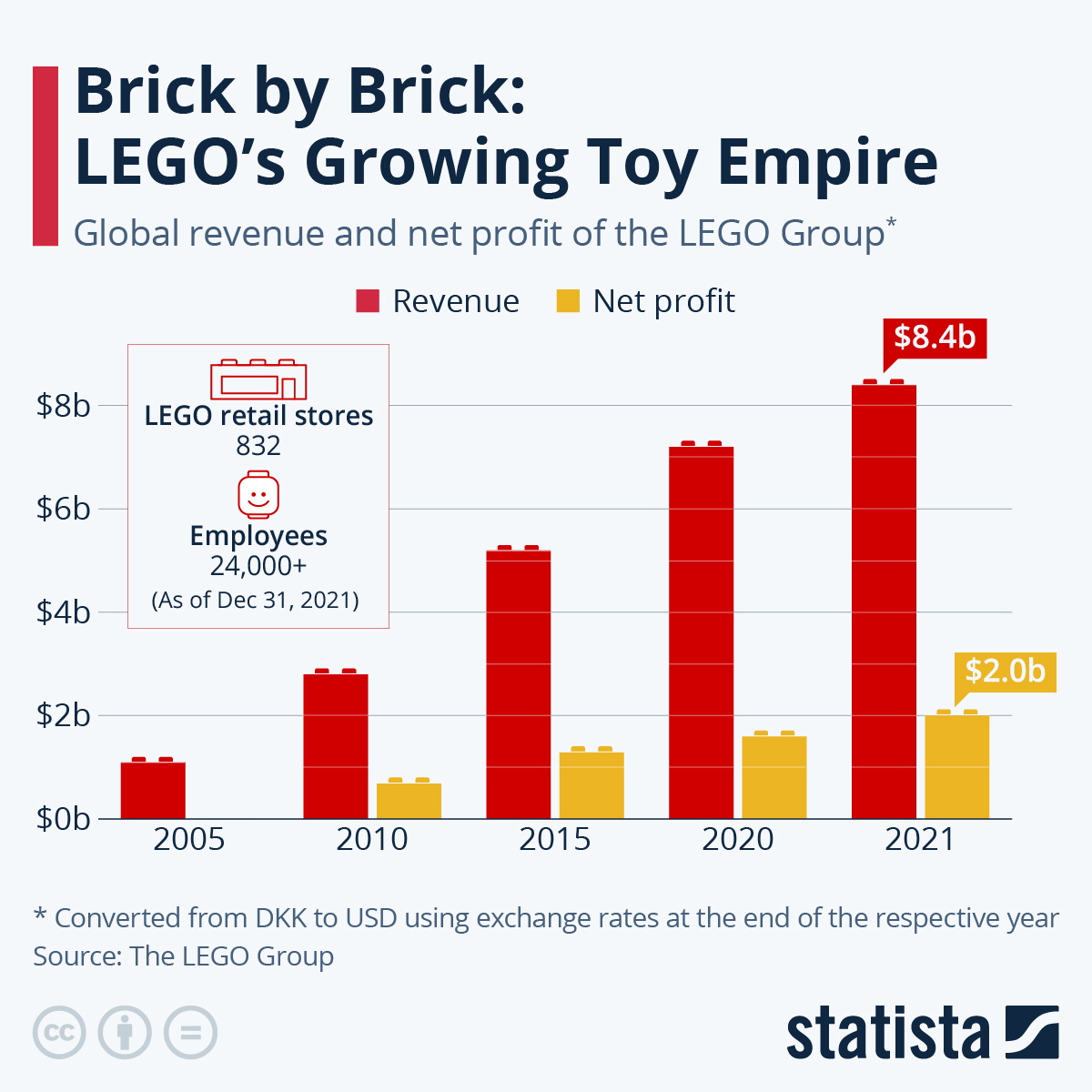
As the following chart shows, the LEGO Group鈥檚 revenue has grown almost sevenfold over the past two decades, reaching $8.4 billion in 2021. The company employs more than 24,000 people worldwide and operates more than 800 LEGO stores as well as several Legoland theme parks. The 鈥渢oy building element鈥� business has also proven largely immune to the Covid-19 pandemic. In each of the past two years, the Billund-based achieved double-digit sales and profit growth.