The dispute between Apple and Epic Games went to another round this week, after the latter on Monday that Apple had threatened to 鈥渢erminate all of its developer accounts and cut Epic off from iOS and Mac development tools.鈥� Apple didn鈥檛 take long to reply, saying that they 鈥渧ery much want to keep the company [Epic] as part of the Apple Developer Program and their apps on the Store,鈥� in a statement published by . Apple goes on to say that 鈥渢he problem Epic has created for itself is one that can easily be remedied,鈥� while stressing that the company isn鈥檛 willing to make an exception for Epic at the expense of its customers.
Last week, Epic had released a Fortnite update that was designed to circumvent Apple and Google鈥檚 in-app payment rules, which would require the mobile games maker to pay a 30-percent commission on every purchase made within the hugely popular game. The move was accompanied by a social media campaign and two separate lawsuits against Apple and Google after both companies had temporarily pulled Fortnite from their app stores, indicating that last week鈥檚 events were part of a long-planned challenge of app store practices on Epic鈥檚 part.
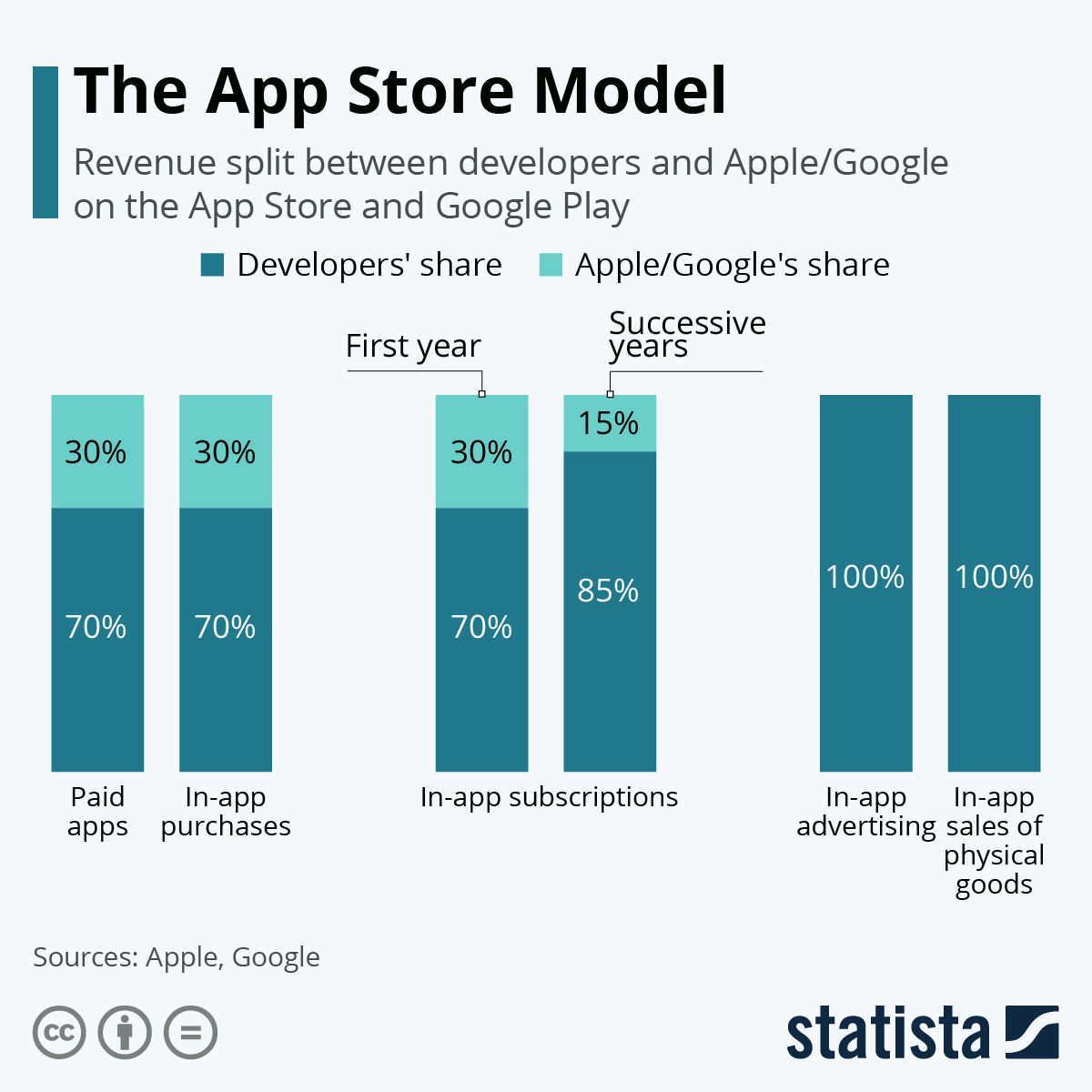
As the following chart sums up, Apple and Google have the same commission structure in place in their respective app stores, which sees both companies take a 30-percent cut on app sales, in-app purchases and subscriptions made within apps, while not charging a commission on in-app advertising or purchases of physical goods through an app. The practice, while industry standard, has drawn more and more vocal criticism in recent years, with Spotify also filing an official complaint with EU regulators over Apple鈥檚 unfair treatment of the music streaming app, which happens to be a direct competitor to Apple Music.