If you used Twitter, Instagram or any other social network in the past few days, chances are that you鈥檝e come across countless portraits of people that have mysteriously aged, gotten younger, grown a beard or changed their appearance in any other more or less obvious way. The reason behind this wave is FaceApp, a mobile app that uses machine learning to manipulate faces on digital photographs, which has gone viral after a couple of celebrities and influencers posted impressively accurate images of their future selves on social media.
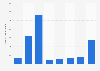
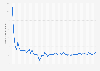
As the following chart shows, FaceApp had a moment in the limelight before, but the 2017 hype around the app was much smaller than the current craze. According to estimates from our partner , the app clocked nearly 30 million downloads in July, catapulting it to the top of the app store charts on both Android and iOS.
The immense popularity of FaceApp has also sparked some concerns over privacy implications of the ongoing craze. In the app鈥檚 terms of use, the app鈥檚 maker, a Russian company called Wireless Lab, is granted 鈥渁 perpetual, irrevocable, nonexclusive, royalty-free, worldwide, fully-paid, transferable sub-licensable license to use, reproduce, modify, adapt, publish, translate, create derivative works from, distribute, publicly perform and display your User Content and any name, username or likeness provided in connection with your User Content in all media formats and channels now known or later developed, without compensation to you鈥�, which may sound worse than it is, assuming that the company has no bad intentions. Following the Cambridge Analytica scandal and the revelations about Russian interference in the 2016 U.S. elections, however, it is perhaps understandable that some alarm bells are going off when an app of Russian origin suddenly has access to data from tens of millions of users.
FaceApp
FaceApp Craze Reaches New Heights


Description
This chart shows estimated worldwide FaceApp downloads by platform (as of July 21, 2019).