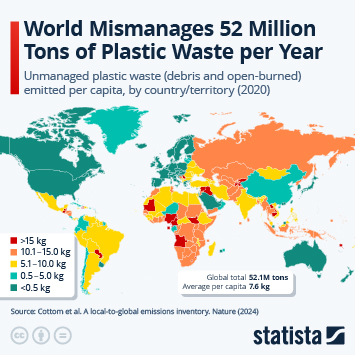
One area in which the problem of global plastic reliance becomes very visible is the plastic waste and scrap trade that carries the inherent risk of air, land and maritime pollution. plastic waste can be lucrative, lack of regulations and oversight have caused a myriad of problems in receiving countries. The sector has kept shifting, avoiding new regulations that try to rein in its issues. This was most widely reported between 2018 and 2021, when China pivoted from being a major waste importer to banning the trade altogether (and stopped reporting import numbers).
In 2025, plastic waste trade data for 125 countries was available from the Japan and wealthy European countries remained among the major net exporters of plastic waste. The United States came in rank 6, having exported a net 79,000 tonnes of plastic waste last year. The Philippines, with a net plastic waste export of more than 58,000 tons in 2025, is a surprising entry in the top 10 of net exporters. The country often linked to plastic land and maritime pollution has turned to exporting to deal with the consequences of an over-reliance on plastics,
to non-OECD members in 2021, is taking in more plastic waste from the EU, while some plastic waste and its higher quality products are being recycled or further processed in However, Asian nations continue to receive large amounts of plastic waste, the biggest recipients now including Malaysia, Vietnam and Indonesia. India also received net plastic waste imports of more than 50,000 tons last year. According to the OECD, Latin America has started to become a, with Honduras and Peru listed as the biggest net importers in the region.