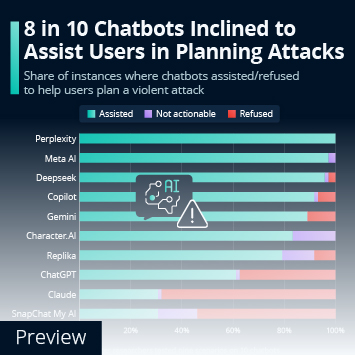
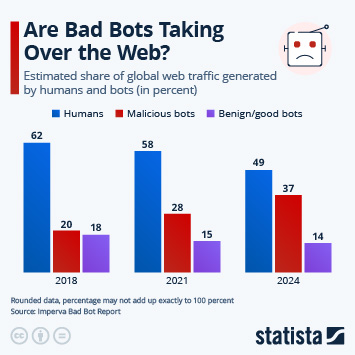
Speaking at the UN Security Council's first session on artificial intelligence, secretary general Ant贸nio Guterres warned that "The malicious use of AI systems for terrorist, criminal or state purposes could cause horrific levels of death and destruction, widespread trauma and deep psychological damage on an unimaginable scale". Guterres called for the creation of a new UN entity, "to support countries to maximize the benefits of AI for good, to mitigate existing and potential risks, and to establish and administer internationally agreed mechanisms of monitoring and governance".
The Netherlands deployed its first lethal autonomous weapons last September, according to the military and intelligence trade journal . The move marks the first time that a NATO army has started operational trials with armed unmanned ground vehicles (UGVs), more commonly known as 鈥渒iller robots鈥� - a worrying shift in warfare from the West.
Four armed Tracked Hybrid Modular Infantry Systems (THeMIS) UGCs were reportedly deployed to Lithuania where they underwent trials in a 鈥渕ilitary-relevant environment鈥�, according to Janes. Unlike drones, which require a human to instruct it where to move and how to act, these robotic tank-like weapons are designed to know how to pull the trigger themselves. The , or merely to regulate them.
Some war drones currently on the market have autonomous lethal capabilities, including some in use in Ukraine. Stationary guns that sense their targets are used at the South Korean border and in Israel.
The vast majority of the world remains critical of lethal autonomous weapons systems in war, according to carried out by Ipsos and the Campaign to Stop Killer Robots. Of the 28 countries surveyed between Nov 20, 2020 and Jan 8, 2021, all but one was predominantly against the use of them.
Sweden (76 percent), Turkey (73 percent) and Hungary (70 percent) showed the strongest opposition to the lethal vehicles in 2021. Meanwhile, India showed by far the most support, at 56 percent of the surveyed population responding that they either somewhat or strongly supported the use of the weapons.
The chief concerns of those against the deployment of lethal autonomous weapons included the belief that the machines would be crossing a moral line through being allowed to kill (66 percent), that the weapons would be 鈥渦naccountable鈥� (53 percent), that killer robots would be subject to technical failures (42 percent) or that they would be illegal (24 percent).