Space industry worldwide - statistics & facts
The final frontier is no longer just a realm of scientific exploration鈥攊t's becoming a booming economic powerhouse. As we look to the stars, we're not just seeing celestial bodies, but also dollar signs. The market size of global space economy amounted to an astronomical 630 billion in 2023. This isn鈥瞭 just a fleeting trend; experts predict this cosmic market could triple in size by 2035, potentially hitting 1.8 trillion U.S. dollars. The sector's robust performance is evident in its year-over-year growth, as the turnover increased from 531 billion U.S. dollars in 2022 to approximately 570 billion U.S. dollars in 2023. This With commercial space products and services leading the charge, accounting for nearly 60 of the industry's turnover, it's clear that space is no longer just the playground of governments and stargazers鈥攊t's becoming a serious business venture for entrepreneurs and investors alike.
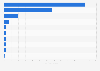
The United States has firmly established its dominance in the new space race, particularly in the satellite industry. As of May 2023, the US owned some 5,184 out of 7,560 active artificial satellites, far surpassing its nearest competitor, the of China, which accounted for only 628 satellites in the Earth orbit. The year also saw a substantial increase in small satellite deployments, with a total of 2,860 launched globally. Notably, OneWeb and Starlink, both US-based companies, were responsible for launching 2,116 of these small satellites, accounting for the majority of the year's deployments. This sector encompasses satellite building, launching, and operation, with private companies playing an increasingly significant role.
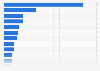
The global space race is reaching new heights as governments worldwide increase their investments in space programs. In 2024, global government expenditure for space programs hit a record of approximately 135 billion U.S. dollars. The United States leads the pack, with NASA's budget projected to be around 27 billion U.S. dollars in 2025. The European Space Agency (ESA) is also making significant strides, with a budget equivalent to roughly 7.7 billion euros in 2025. Moreover, India, too, is investing heavily in space technology, with the Indian Space Research Organisation (ISRO) allocating 130.4 billion Indian rupees for fiscal year 2025.As nations continue to increase their space investments, the race to explore and utilize the cosmos is intensifying, promising new discoveries and opportunities for humanity.
US Dominates Satellite Industry
The United States has firmly established its dominance in the new space race, particularly in the satellite industry. As of May 2023, the US owned some 5,184 out of 7,560 active artificial satellites, far surpassing its nearest competitor, the of China, which accounted for only 628 satellites in the Earth orbit. The year also saw a substantial increase in small satellite deployments, with a total of 2,860 launched globally. Notably, OneWeb and Starlink, both US-based companies, were responsible for launching 2,116 of these small satellites, accounting for the majority of the year's deployments. This sector encompasses satellite building, launching, and operation, with private companies playing an increasingly significant role.
Space Agencies鈥� rising budget
The global space race is reaching new heights as governments worldwide increase their investments in space programs. In 2024, global government expenditure for space programs hit a record of approximately 135 billion U.S. dollars. The United States leads the pack, with NASA's budget projected to be around 27 billion U.S. dollars in 2025. The European Space Agency (ESA) is also making significant strides, with a budget equivalent to roughly 7.7 billion euros in 2025. Moreover, India, too, is investing heavily in space technology, with the Indian Space Research Organisation (ISRO) allocating 130.4 billion Indian rupees for fiscal year 2025.As nations continue to increase their space investments, the race to explore and utilize the cosmos is intensifying, promising new discoveries and opportunities for humanity.