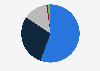
| Characteristic | Television channels |
|---|---|
| - | - |
| - | - |
| - | - |
| - | - |
| - | - |
| - | - |
| - | - |
| - | - |
| - | - |
| - | - |
| - | - |
| - | - |
| - | - |
| - | - |
| - | - |
| - | - |
| - | - |
| - | - |
| - | - |
| - | - |
| - | - |
| - | - |
| - | - |
| - | - |
| - | - |
| - | - |
| - | - |
| - | - |
| - | - |
| - | - |
| - | - |
| - | - |
| - | - |
| - | - |
| - | - |
| - | - |
| - | - |
| - | - |
The chart is not accessible to screen readers. Please switch to the table view to access the data.
Download
Source
Source
Release date
November 2019
More information
Region
Europe
Survey time period
December 2019
Supplementary notes
The source defines the concept of a TV channel established in one country as follows:
- The TV channel broadcasts in the targeted country鈥檚 main language(s) (dubbing or sub-titling).
- The TV channel licence explicitly mentions the targeted country.
- The TV channel has offices in the targeted country, implying there may be advertising sales and/or local production.
This table includes extra-European channels available in Europe.
Citation formats