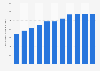
| Characteristic | Class I | Amtrak | Commuter rail | Heavy rail | Light rail |
|---|---|---|---|---|---|
| - | - | - | - | - | - |
| - | - | - | - | - | - |
| - | - | - | - | - | - |
| - | - | - | - | - | - |
| - | - | - | - | - | - |
| - | - | - | - | - | - |
| - | - | - | - | - | - |
| - | - | - | - | - | - |
| - | - | - | - | - | - |
| - | - | - | - | - | - |
| - | - | - | - | - | - |
| - | - | - | - | - | - |
January 2018
United States
2004 to 2012
* Amtrak and Class I data unavailable for 2012.
Class I rail data represent miles of road owned (aggregate length of road, excluding yard tracks, sidings, and parallel lines). Portions of class I freight railroads, Amtrak, and commuter rail networks share common trackage. Amtrak data represent nondirectional route-miles operated. Some Amtrak service is operated on the right-of-way owned by Amtrak, but the majority of route miles are on right-of-way owned by class I freight railroads or commuter rail networks. d Transit system length is measured in directional route-miles. Directional route-miles are the distance in each direction over which public transportation vehicles travel while in revenue service. Directional route-miles are computed with regard to direction of service, but without regard to the number of traffic lanes or rail tracks existing in the right-of-way. Beginning in 2002, directional route-mileage data for the Commuter and Light rail modes include purchased transportation. 2005 and later years directional route-mileage data for the Heavy rail mode include purchased transportation. Beginning in 2011, Light rail includes Light Rail, Street Car Rail, and Hybrid Rail.