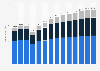
| Characteristic | Share of respondents |
|---|---|
| - | - |
| - | - |
| - | - |
| - | - |
| - | - |
| - | - |
| - | - |
| - | - |
| - | - |
| - | - |
| - | - |
| - | - |
| - | - |
The chart is not accessible to screen readers. Please switch to the table view to access the data.
August 2024
United Kingdom (Great Britain)
October 31 to November 22, 2023
929 respondents
18 years and older
gamblers with a PGSI score of 1+ who sought treatment/support
Online panel
The source specifies that the study used "the full (9-item) Problem Gambling Severity Index (PGSI) to measure self-reported levels of gambling behavior which may cause harm to the gambler. The PGSI consists of nine items ranging from 鈥榗hasing losses鈥� to 鈥榞ambling causing health problems鈥� to 鈥榝eeling guilty about gambling鈥�. Each item is assessed on a four-point scale: never, sometimes, most of the time, almost always. Responses to each item are given the following scores: never = 0; sometimes = 1; most of the time = 2; almost always = 3. When scores for each item are summed, a total score ranging from 0 to 27 is possible. A PGSI score of 8 or more represents a problem gambler".