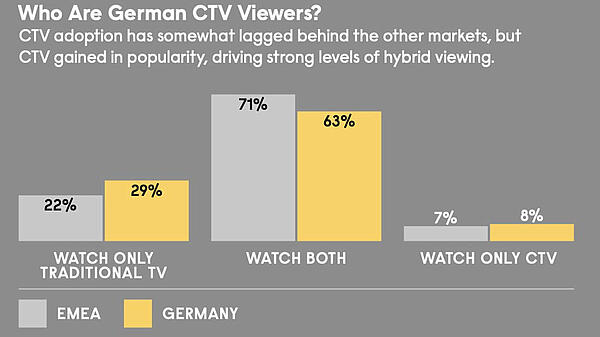
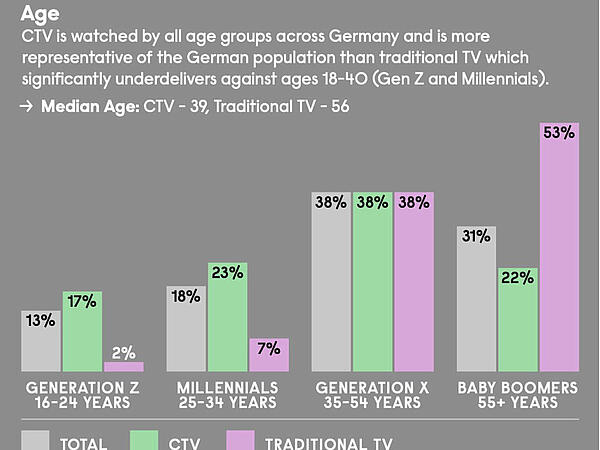
At the same time, more and more content on offer is being financed through advertising; or rather, ad-free content provided by Netflix and Disney+, for example, no longer dominate the consumption of CTV content. By now, the average CTV viewer watches almost as much ad-funded content as paid content. So all is well in the connected TV market, or is it? On further examination, there are indeed some challenges.
2. A closer look – strategic challenges in a new media segment
With its seemingly high-quality content and wide reach, CTV, which is often used on platforms such as Google Chromecast, Amazon Fire TV, Roku, Apple TV, and Samsung TV, among others, seems to be a safe bet when it comes to ad placement. And since the imminent death of 3rd-party cookies is causing panic about a lack of targeting on desktops and mobile devices, CTV inventory is becoming an attractive option. There may, however, be a serious disadvantage for those who adhere to certain duties of care: So-called “bad actors� could easily take advantage of the current CTV hype.
Consequently, we are now faced with challenges that we already encountered when dealing with fixed and mobile internet connections, which were believed to have been partially overcome:
High CPMs attract scammers. Pricing is higher in CTV inventory than in many other forms of advertising. Scammers prefer high CPMs because they can maximize their returns with them. Coupled with a vulnerable advertising ecosystem, it is possible to gain high yields with little effort – ideal conditions for scammers and the like.
Scarcity results in lower standards. Due to its relatively recent development, there is (still) little CTV inventory. Further CTV channels/apps need to be developed for publishers to earn more. In addition, content needs to be either produced by publishers themselves or they need to obtain content licenses. This creates a domino effect: Advertising platforms and networks are overzealous when it comes to acquiring sufficient inventory to keep the business going, which results in excessively lax standards on the supply side. This leads to greater heterogeneity and a lack of pervasive market standards. Missing cross-channel concepts result in experimental squandering. Both advertisers and publishers often take the approach of simply “extending� content and campaigns to CTV environments. This is a cardinal error from the early days of smartphone use. Instead, integrated media strategies are required.
The dominance of platforms is crushing smaller publishers and therefore acts as an obstacle to creativity. It is already noticeable in the CTV market that large platforms are dictating the rules by which content and advertising are distributed. This could provoke adverse reactions from publishers, who may not be willing to invest in yet another walled garden, even though the CTV channel might also be of interest to news publishers thanks to its high level of interactivity. All of the above-mentioned points are challenges that can be dealt with, but in order to unleash the full potential of the new channel, a judicious media distribution and advertising strategy is required.
3. Outlook – what media owners and advertisers can do
For advertisers, CTV can be a viable and powerful channel which they could add to their advertising mix. However, one should be aware of the fact that CTV advertising may also entail risks. Don’t get swept away by the hype and/or fall prey to scammers. It is a wise approach to invest time and resources into one’s strategy in order to use CTV advertising deliberately and properly before expanding one’s activities.
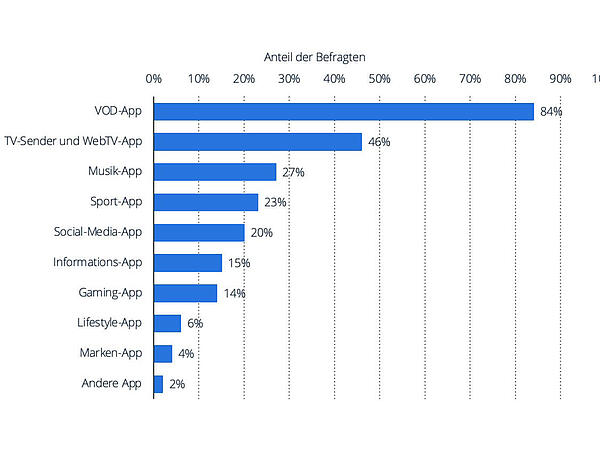
For publishers, the new CTV environment can be an attractive distribution channel for potentially interactive and time-consuming content – consumers are open to this, and the platforms have the necessary interactive capabilities. Similar to what was true for the mobile segment after the launch of the iPhone, there is no time to waste because it is the early adopters who will benefit in the long run when it comes to reach. By now, CTV platform usage is far from being restricted to video content: